
How to Make Cat Food Recipes – Easy & Nutritious DIY Guide

As a cat parent, I understand the deep desire to provide the very best for our feline companions. When I first started exploring how to make cat food recipes at home, I was driven by a simple yet powerful motivation: knowing exactly what goes into my cat’s bowl. Commercial cat foods, while convenient, sometimes contain ingredients that leave us wondering whether we’re truly nourishing our beloved pets. The good news is that with the right knowledge, verified ingredients, and a commitment to safety, you can create wholesome, nutritious meals that honor your cat’s carnivorous nature.
Table of Contents
In this comprehensive guide, I’ll walk you through everything you need to know about preparing homemade cat food—from understanding feline nutritional requirements to providing you with balanced, vet-informed recipes you can confidently prepare in your own kitchen.
What Is Homemade Cat Food and Why Consider Making It?
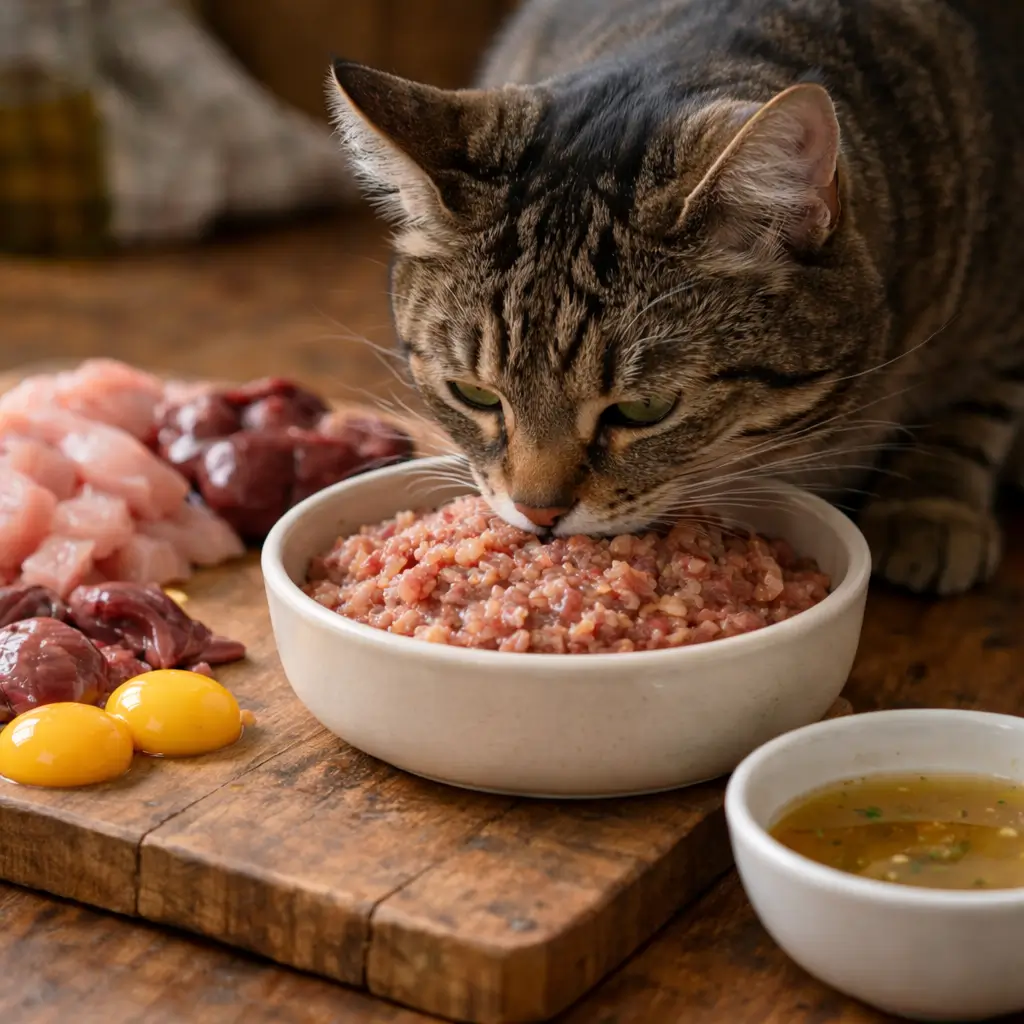
Homemade cat food refers to meals prepared at home using fresh, whole ingredients tailored to meet a cat’s specific nutritional needs as obligate carnivores. Unlike commercial options, DIY cat food recipes allow pet owners complete control over ingredient quality, protein sources, and the exclusion of artificial additives or fillers that may not benefit feline health.
The Benefits of DIY Cat Nutrition
When I began crafting nutritious cat snacks and meals at home, I quickly discovered several compelling advantages that reinforced my decision.
Complete ingredient transparency stands at the forefront. You know precisely what proteins, fats, and supplements enter your cat’s system. For cats with food sensitivities or allergies—and yes, chicken and fish can be common allergens for some felines—this control proves invaluable.
Freshness matters to our cats just as it does to us. Homemade meals lack the extended processing and preservative requirements of shelf-stable commercial foods. Many cat owners report improvements in their pets’ coat quality, energy levels, and digestive health after transitioning to carefully prepared home cooking.
Customization for health conditions becomes possible when you prepare food yourself. Whether your cat requires a novel protein due to allergies or needs adjusted macronutrient ratios, homemade feeding provides flexibility that mass-produced options simply cannot match.
Understanding Your Cat’s Unique Nutritional Needs
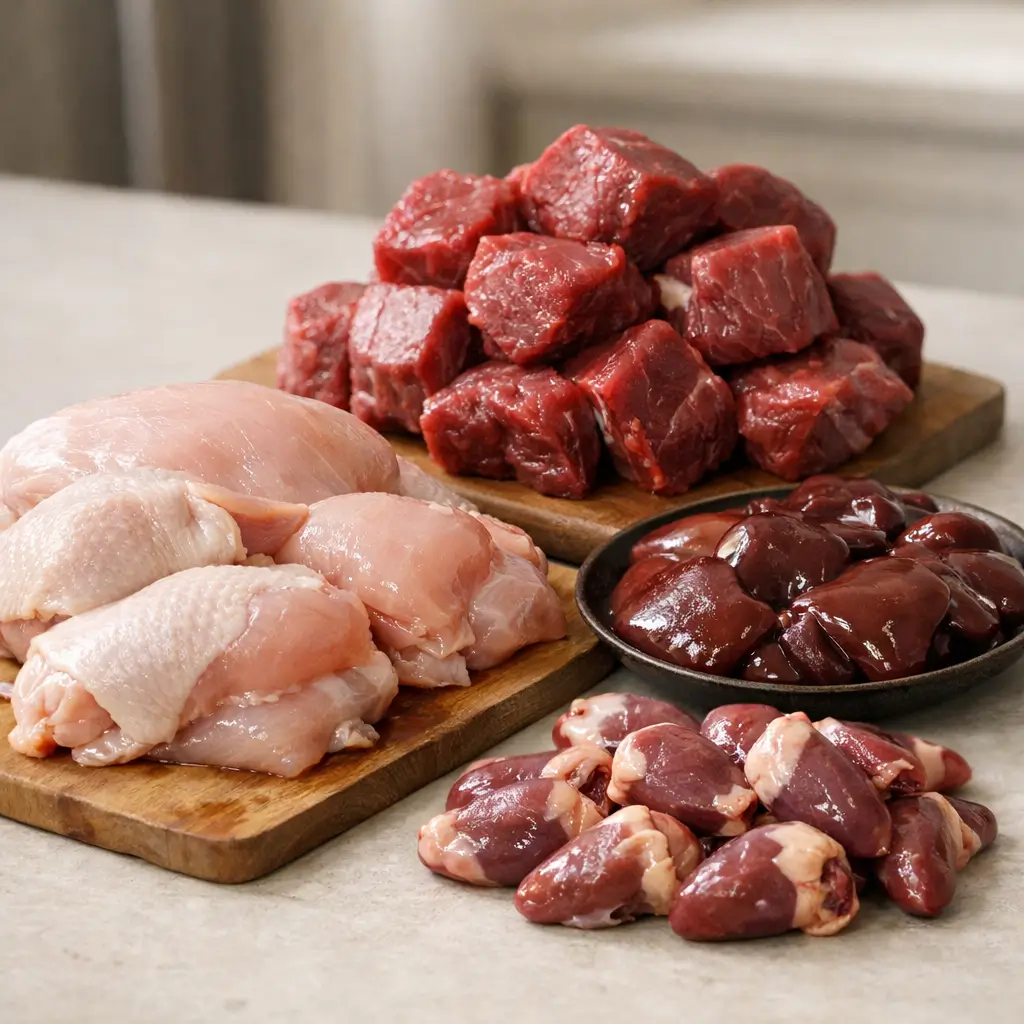
Before we dive into recipes, I must emphasize something critical: cats are obligate carnivores. This biological classification means their bodies have evolved to derive essential nutrients primarily from animal tissues. Unlike dogs or humans, cats cannot synthesize certain vital compounds from plant sources.
Essential Nutrients Cats Cannot Live Without
Taurine represents perhaps the most crucial amino acid for cats. Unlike many mammals, cats cannot produce adequate taurine internally. Deficiency leads to serious conditions including dilated cardiomyopathy (heart disease), retinal degeneration, and reproductive problems. This is why any homemade cat diet must include taurine supplementation or taurine-rich organ meats like heart.
Arachidonic acid, an essential fatty acid, must come directly from animal fats because cats lack the enzyme to convert it from plant-based precursors. This nutrient supports skin health, kidney function, and reproduction.
Vitamin A poses another unique challenge. While humans and dogs can convert beta-carotene from vegetables into vitamin A, cats require preformed vitamin A from animal sources like liver.
Vitamin D similarly requires direct dietary intake from animal tissues, as cats cannot synthesize it through sun exposure the way humans do.
The Difference Between Complete Meals and Complementary Treats
This distinction carries enormous importance for your cat’s health. A complete and balanced meal meets all of a cat’s nutritional requirements according to established guidelines such as those from AAFCO (Association of American Feed Control Officials) or FEDIAF (European Pet Food Industry Federation). These meals can serve as the sole diet.
Complementary treats or toppers, by contrast, provide additional nutrition or variety but lack the complete nutrient profile for exclusive feeding. Safe cat treats made at home can supplement commercial diets wonderfully, but they should never replace balanced nutrition.
The recipes I’ll share later in this article are formulated as complete meal frameworks, though I strongly encourage consultation with a veterinary nutritionist for long-term feeding plans.
How to Make Cat Food Recipes Safely: Critical Guidelines
Creating homemade cat treats and meals requires more than good intentions—it demands careful attention to food safety, ingredient selection, and nutritional balance.
Foods That Are Toxic to Cats
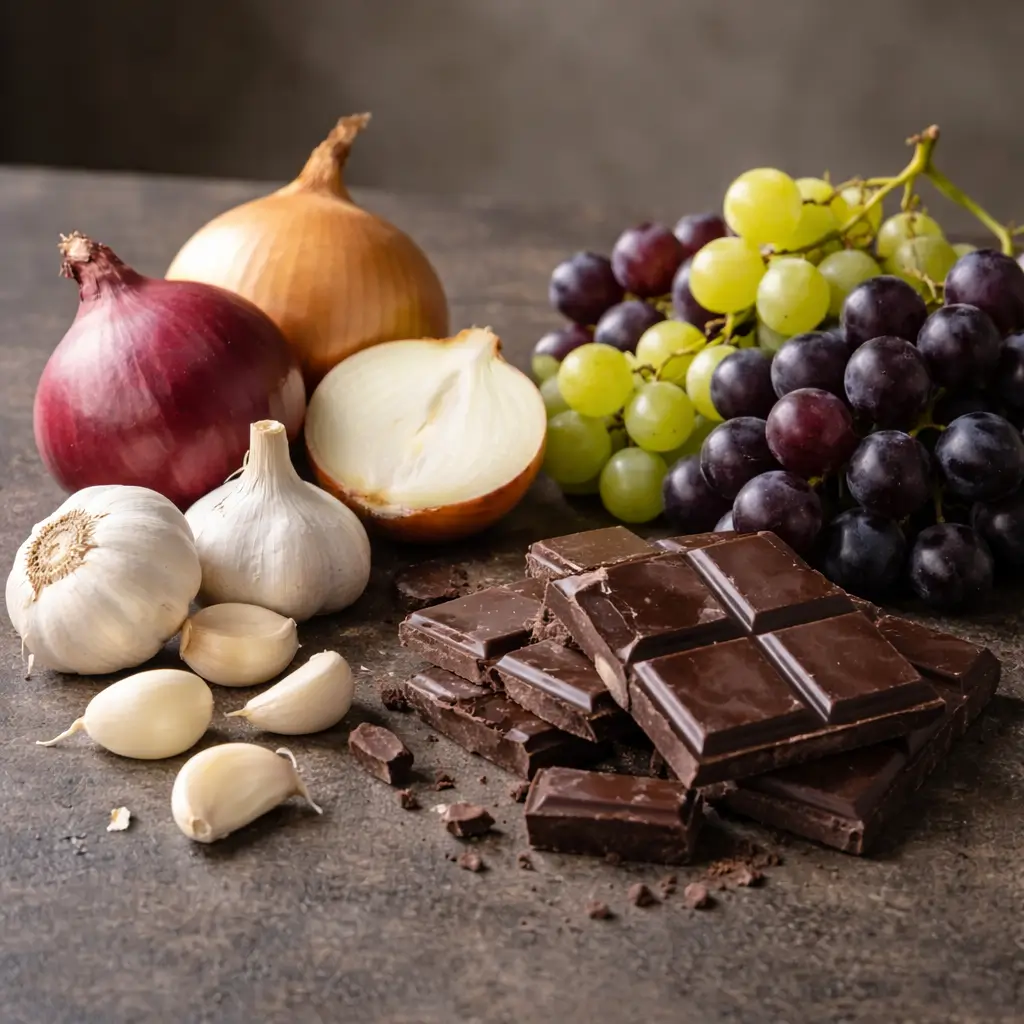
Never include these ingredients in any recipe:
- Onions and garlic (including powders) contain compounds that damage feline red blood cells, potentially causing hemolytic anemia
- Grapes and raisins can cause acute kidney failure
- Chocolate and caffeine contain theobromine and caffeine, both toxic to cats
- Xylitol (artificial sweetener) causes dangerous insulin release
- Alcohol in any form
- Raw yeast dough expands in the digestive tract and produces alcohol
- Certain nuts, particularly macadamia nuts
Safe Food Handling Practices
When preparing balanced cat diet recipes, treat the process with the same care you’d apply to cooking for immunocompromised family members.
Keep raw meats refrigerated until immediately before preparation. Cross-contamination between raw ingredients and finished food poses risks to both your cat and your family.
Cook poultry thoroughly to an internal temperature that eliminates harmful bacteria. While some advocates promote raw feeding, the potential for pathogen transmission—including Salmonella and E. coli—represents a genuine health consideration.
Store homemade food properly. Refrigerated portions remain safe for three to four days; frozen portions can last two to three months when stored in airtight containers.
Essential Equipment and Supplements for DIY Cat Food
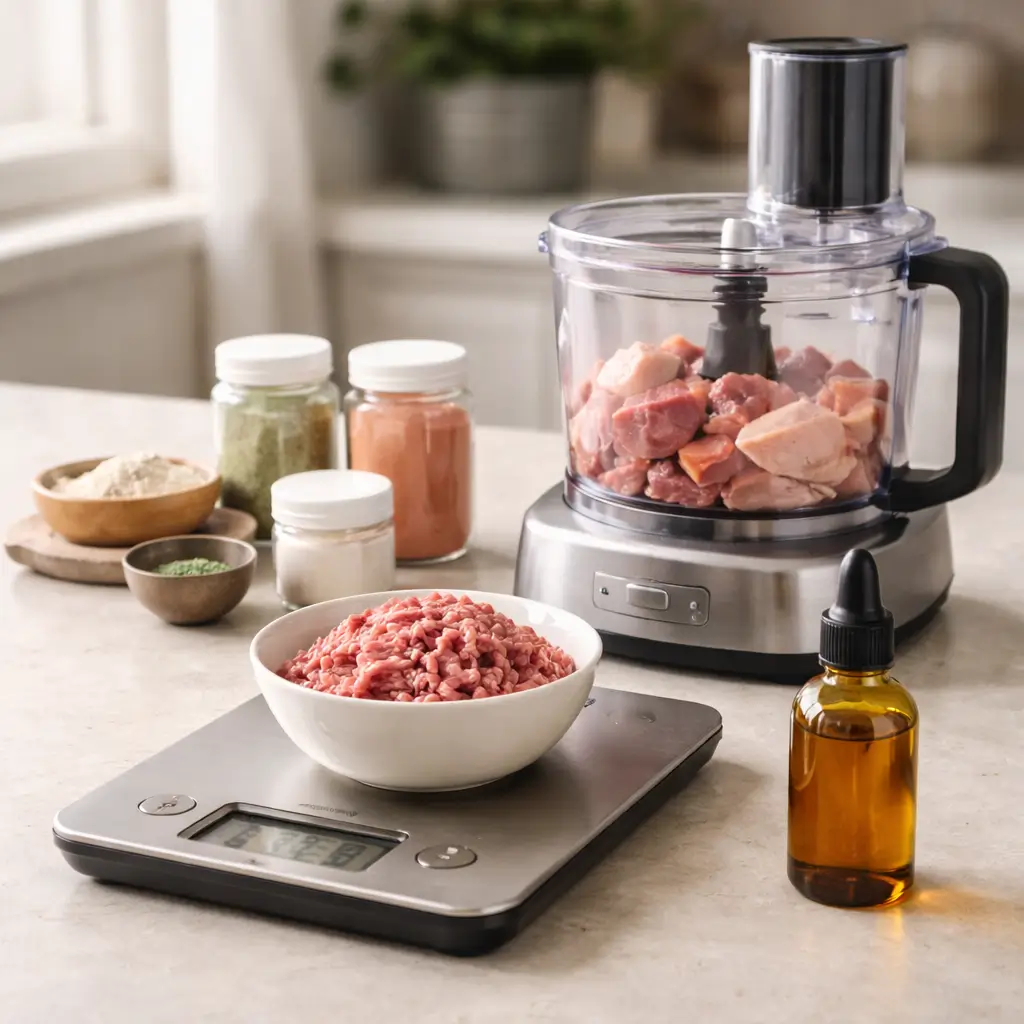
Before attempting your first recipe, gather the necessary tools and supplements that transform simple ingredients into complete feline nutrition.
Kitchen Equipment
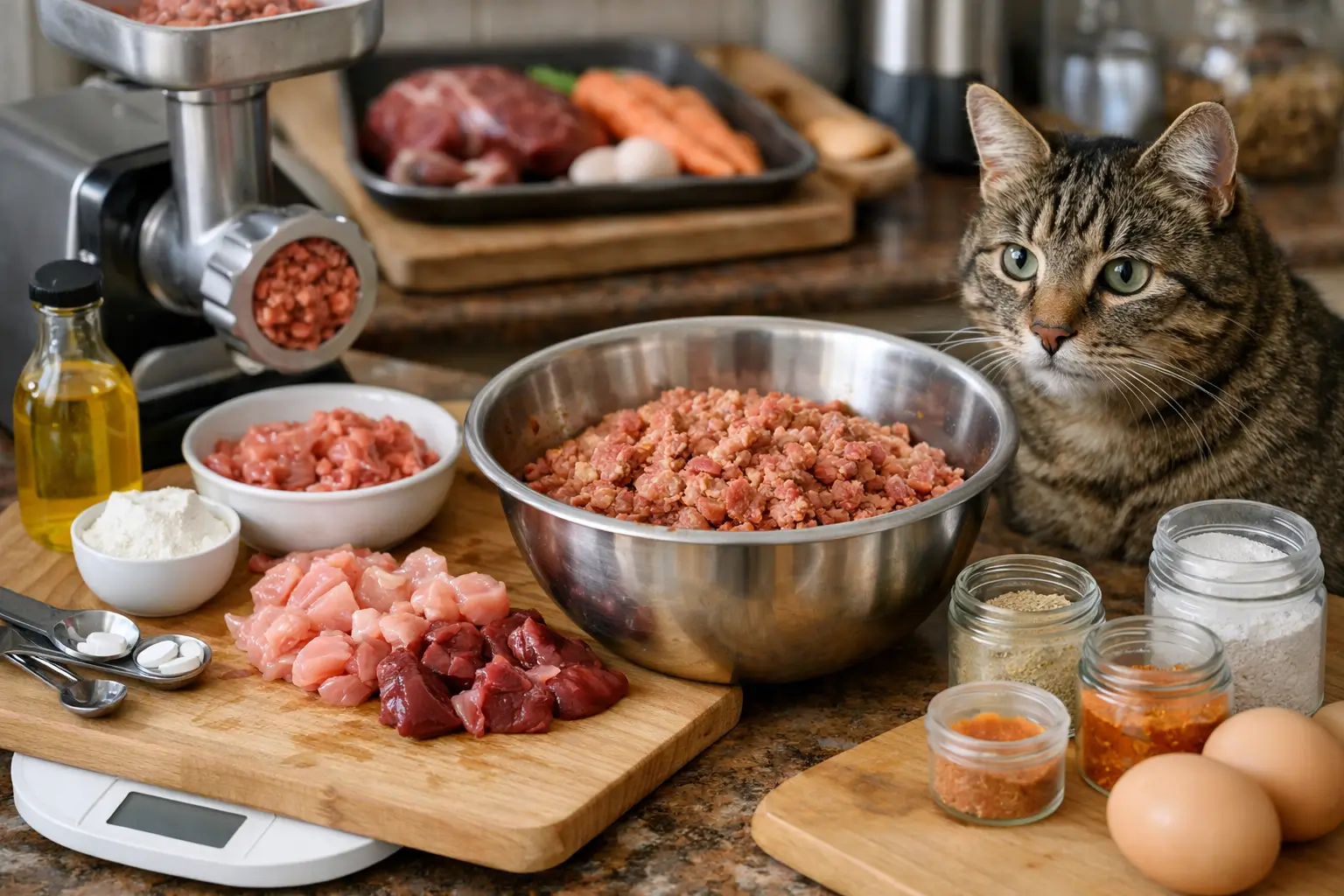
A reliable kitchen scale measuring in grams proves essential. Eyeballing portions leads to nutritional imbalances over time. Food processor or meat grinder helps achieve appropriate textures and thoroughly incorporates supplements. Airtight storage containers and ice cube trays facilitate portioning and freezing.
Required Supplements
This point deserves emphasis: meat alone does not constitute complete cat nutrition. Wild cats consume entire prey animals—bones, organs, and all. Our kitchen preparations require supplements to replicate this nutritional completeness.
Taurine powder is non-negotiable. Heat destroys natural taurine in meat, making supplementation essential even when using taurine-rich ingredients.
Calcium must be added unless you’re including properly ground raw bones. Bone meal or eggshell powder provides this crucial mineral for skeletal and cardiac health.
Fish oil or salmon oil supplies omega-3 fatty acids (EPA and DHA) that support skin, coat, and cognitive function.
Vitamin E acts as an antioxidant and supports immune function.
Vitamin B complex ensures adequate B-vitamin intake, as some are heat-sensitive and may be reduced during cooking.
Many cat owners find that purchasing a commercial feline supplement premix designed for homemade diets simplifies the process while ensuring complete nutrition. Products formulated specifically for this purpose take much of the guesswork out of balancing vitamins and minerals.
Sample Balanced Recipes: From Theory tSample Balanced Recipes: From Theory to Practice
Now we arrive at the heart of learning how to make cat food recipes—actual formulations you can prepare. These recipes are designed as complete meal frameworks following general nutritional principles for feline health.
Important Disclaimer: These sample balanced recipes provide a foundation for homemade feeding. However, individual cats have varying nutritional needs based on age, weight, activity level, and health status. Please consult your veterinarian or a board-certified veterinary nutritionist to adjust portions and confirm suitability for your specific cat.
Note on Supplements: The recipes below list individual supplements (Calcium, Taurine). However, if you are using a comprehensive “All-in-One” Commercial Premix (like TCfeline, Alnutrin, or EZComplete), strictly follow the manufacturer’s instructions on the package and do not add extra calcium or taurine unless specifically instructed, to avoid dangerous overdosing.
Recipe 1: Chicken-Based Complete Meal
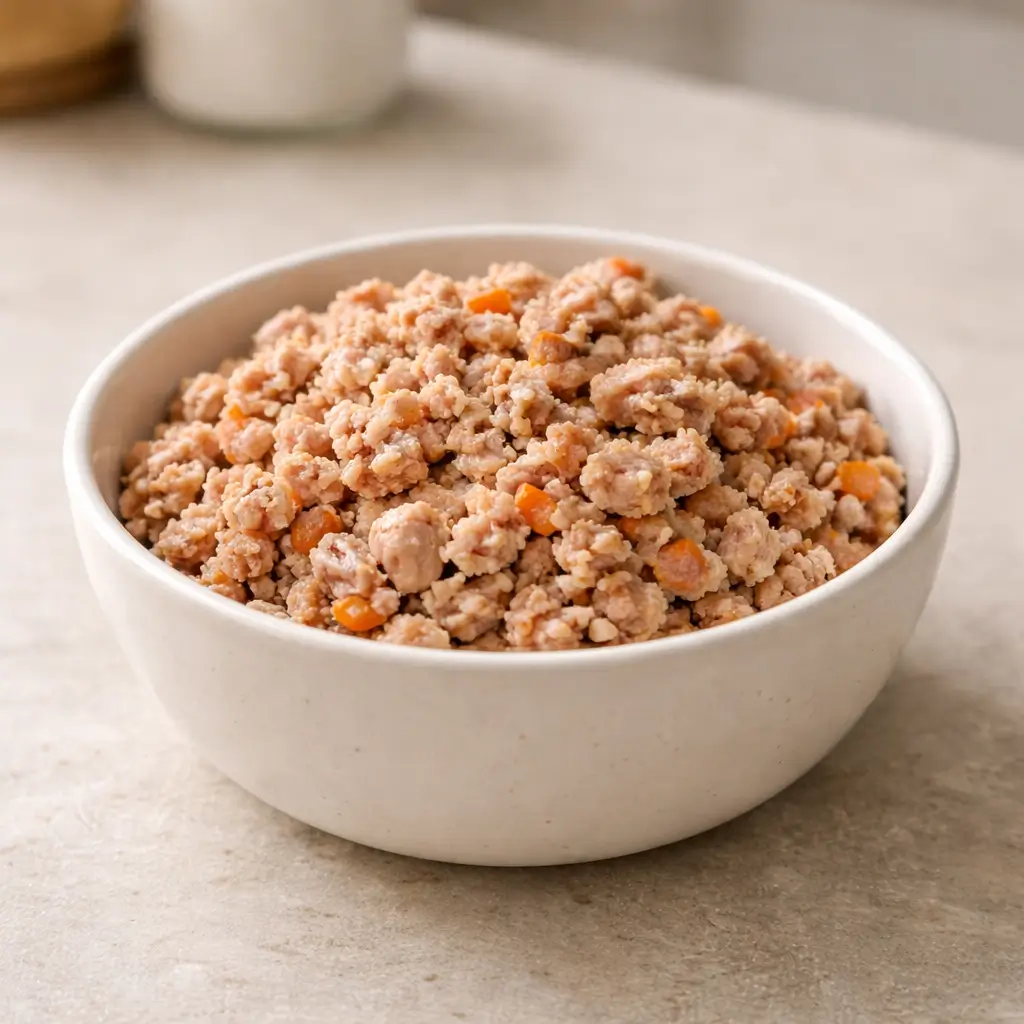
Yield: Approximately 5-6 servings
Ingredients:
- 450g (1 lb) boneless, skinless chicken thighs (dark meat preferred for higher taurine and fat content)
- 100g (3.5 oz) chicken liver
- 50g (1.75 oz) chicken heart
- 1 large egg yolk (raw or lightly cooked)
- 30ml (2 tablespoons) chicken broth (low-sodium, no onion or garlic)
- 4g (1 teaspoon) fish oil or salmon oil
- Supplements (Choose A or B):
- Option A (Easiest): A comprehensive Feline Premix (add amount per package instructions).
- Option B (If not using a complete Premix): 2000mg taurine powder + 1000mg calcium (from bone meal or eggshell powder) + Vitamin B Complex.
Preparation Steps:
Step 1: Begin by ensuring all work surfaces, utensils, and your hands are thoroughly cleaned. Remove chicken thighs, liver, and heart from refrigeration.
Step 2: Cut the chicken thighs into small chunks suitable for grinding or processing. Trim any excessive fat, but retain some—fat provides essential fatty acids and palatability.
Step 3: Using a food processor or meat grinder, process the chicken thighs until they reach a ground consistency. Transfer to a large mixing bowl.
Step 4: Process the chicken liver and heart until finely minced. Add to the bowl with the ground chicken thighs. Organ meats provide crucial vitamins A and B, iron, and additional taurine.
Step 5: Add the egg yolk to the meat mixture. Egg yolks contribute vitamin D, biotin, and healthy fats.
Step 6: Incorporate the fish oil. If choosing Option B (individual supplements), add the taurine powder and calcium now and mix thoroughly.
Step 7: If choosing Option A, add the feline vitamin/mineral premix according to package directions. Stir in the chicken broth to achieve desired consistency.
Step 8: Divide into individual portion containers based on your cat’s daily caloric needs. Refrigerate portions for use within 3-4 days; freeze remainder.
Feeding Guidance: An average adult cat (4-5kg/9-11 lbs) typically requires 200-250 calories daily. Adjust portions based on your cat’s specific needs as determined with your veterinarian.
Recipe 2: Rabbit-Based Novel Protein Meal
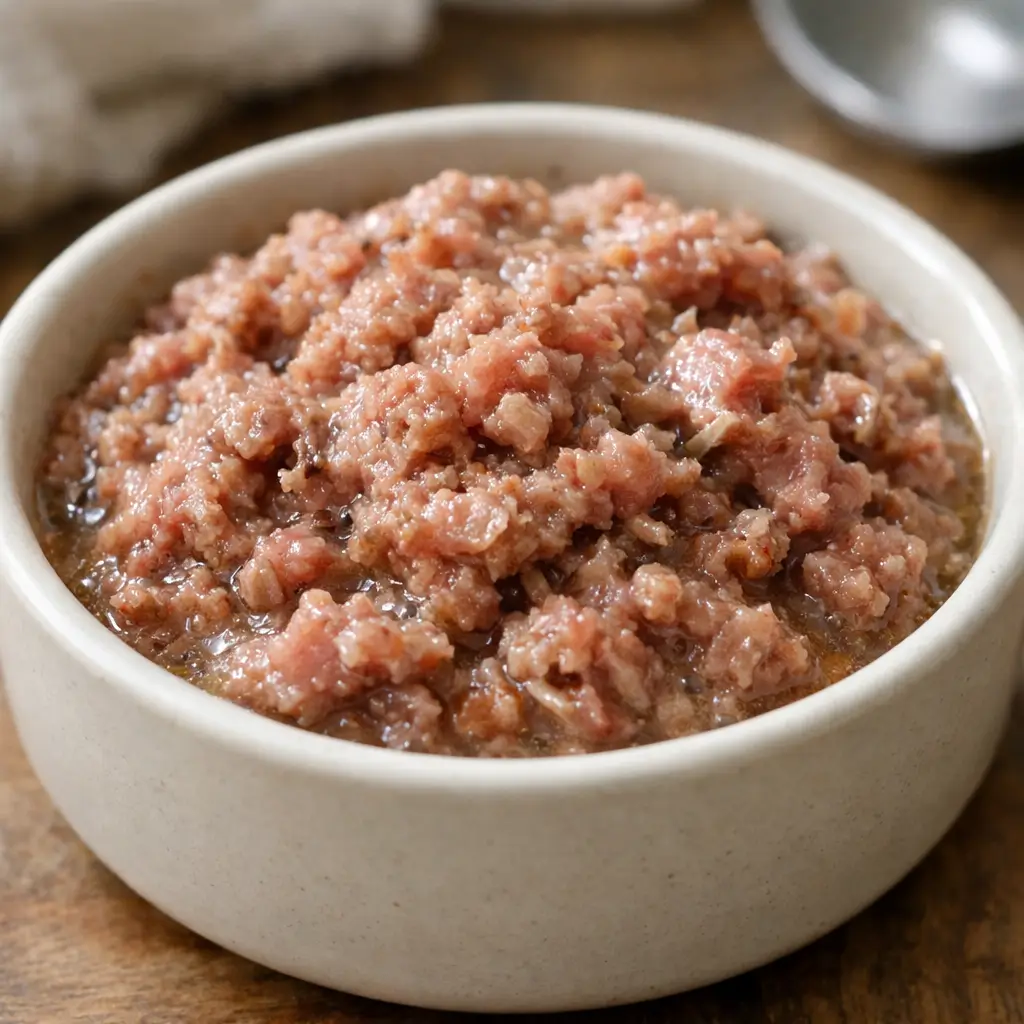
Yield: Approximately 5-6 servings
Rabbit serves as an excellent novel protein for cats with sensitivities to more common proteins like chicken or fish. Its lean profile and digestibility make it suitable for many cats requiring dietary adjustments.
Ingredients:
- 450g (1 lb) boneless rabbit meat
- 80g (2.8 oz) rabbit liver (or substitute chicken liver if unavailable)
- 50g (1.75 oz) rabbit kidney or heart
- 1 large egg yolk
- 30ml (2 tablespoons) water or low-sodium bone broth
- 5g (1 teaspoon) duck fat or chicken skin (rabbit is very lean and requires added animal fat)
- 4g (1 teaspoon) fish oil
- Supplements (Choose A or B):
- Option A: A comprehensive Feline Premix (add amount per package instructions).
- Option B: 2000mg taurine powder + 1000mg calcium (from bone meal) + Vitamin B Complex.
Preparation Steps:
Step 1: Prepare your workspace with clean equipment. Remove rabbit meat from refrigeration.
Step 2: Cut rabbit meat into chunks and process until ground. Ensure you add the supplemental fat source (duck fat/chicken skin).
Step 3: Process the rabbit liver and kidney/heart until finely incorporated. Organ meats should comprise approximately 10-15% of the total recipe.
Step 4: Combine all ground meats in a mixing bowl. Add the egg yolk, fat source, and fish oil.
Step 5: Measure and add your chosen supplements (Premix OR individual Calcium/Taurine). Mix thoroughly.
Step 6: Add water or broth to achieve appropriate moisture content—cats have low thirst drives and benefit from moisture-rich foods.
Step 7: Portion, label with date, and store appropriately.
Recipe 3: Beef-Based Complete Meal
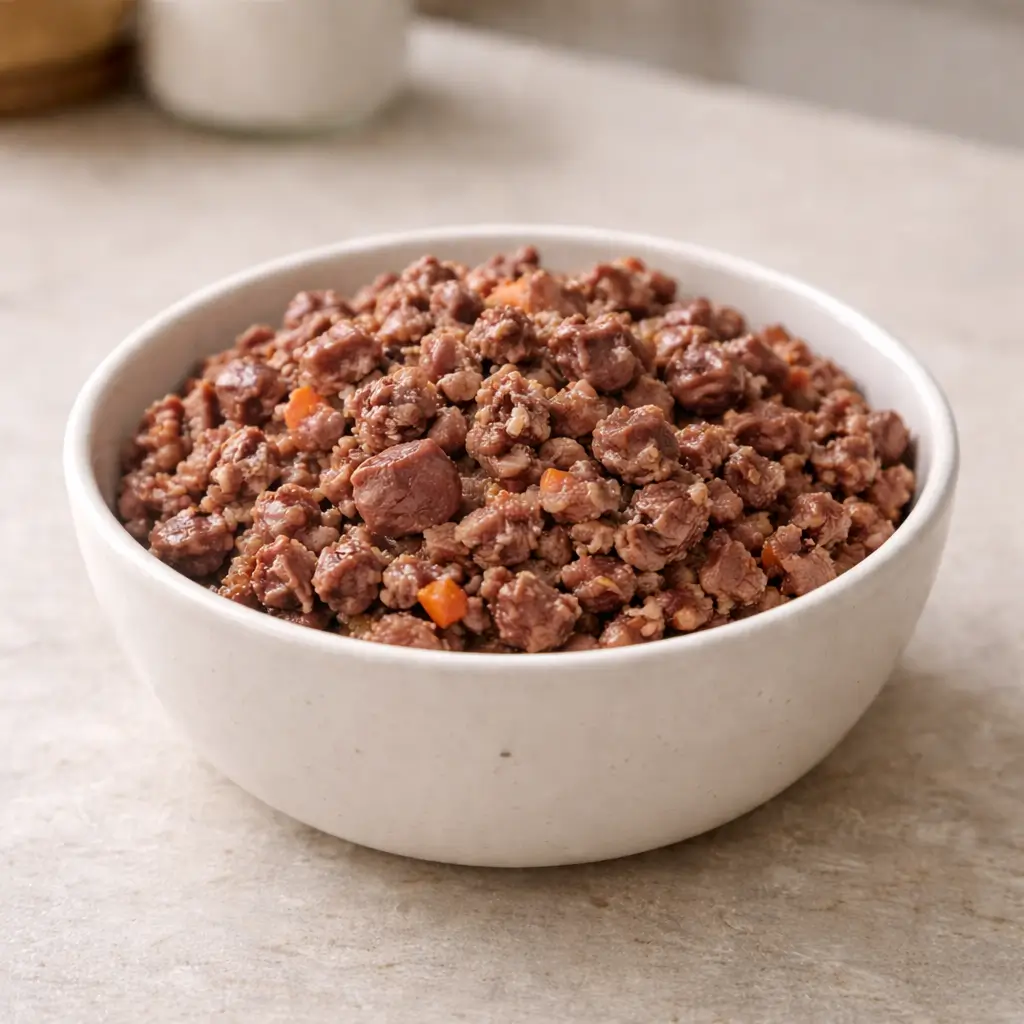
Yield: Approximately 5-6 servings
Beef provides excellent nutrition for cats, offering robust flavor that many felines find irresistible.
Ingredients:
- 400g (14 oz) lean ground beef (85/15 ratio)
- 100g (3.5 oz) beef liver
- 50g (1.75 oz) beef heart
- 1 large egg yolk
- 30ml (2 tablespoons) water
- 4g (1 teaspoon) fish oil
- Supplements (Choose A or B):
- Option A: A comprehensive Feline Premix (add amount per package instructions).
- Option B: 2000mg taurine powder + 1000mg calcium (from bone meal) + Vitamin B Complex.
Preparation Steps:
Step 1: In a large bowl, place the ground beef. If using whole cuts, grind or process to appropriate consistency.
Step 2: Process beef liver and heart until finely minced, then combine with ground beef.
Step 3: Add egg yolk, water, and fish oil to the meat mixture.
Step 4: Incorporate your chosen supplements (Premix OR individual Calcium/Taurine), stirring thoroughly to distribute evenly.
Step 5: Portion into daily servings based on your cat’s caloric requirements. Store properly.
Special Considerations and Health Warnings
Creating homemade cat snacks and complete meals demands awareness of specific health conditions that affect dietary requirements.
Cats with Chronic Kidney Disease
Warning: High-protein diets can be dangerous for cats with chronic kidney disease (CKD). These cats often require reduced but high-quality protein to minimize the workload on compromised kidneys. If your cat has been diagnosed with CKD, do not implement homemade feeding without direct veterinary supervision and potentially a prescription therapeutic diet.
Cats with Pancreatitis
Warning: High-fat diets are dangerous for cats with pancreatitis. This condition requires carefully controlled fat intake. The recipes provided contain moderate fat levels appropriate for healthy cats but may not suit those with pancreatic issues. Consult your veterinarian before feeding any homemade recipes to cats with pancreatitis history.
Cats with Food Allergies
Some cats develop allergies to common proteins. Signs include excessive scratching, skin irritation, digestive upset, or ear infections. Chicken and fish represent the most common feline food allergens. The rabbit recipe offered above provides an alternative for cats requiring novel proteins, but true elimination diets require veterinary guidance.
Transitioning Your Cat to Homemade Food
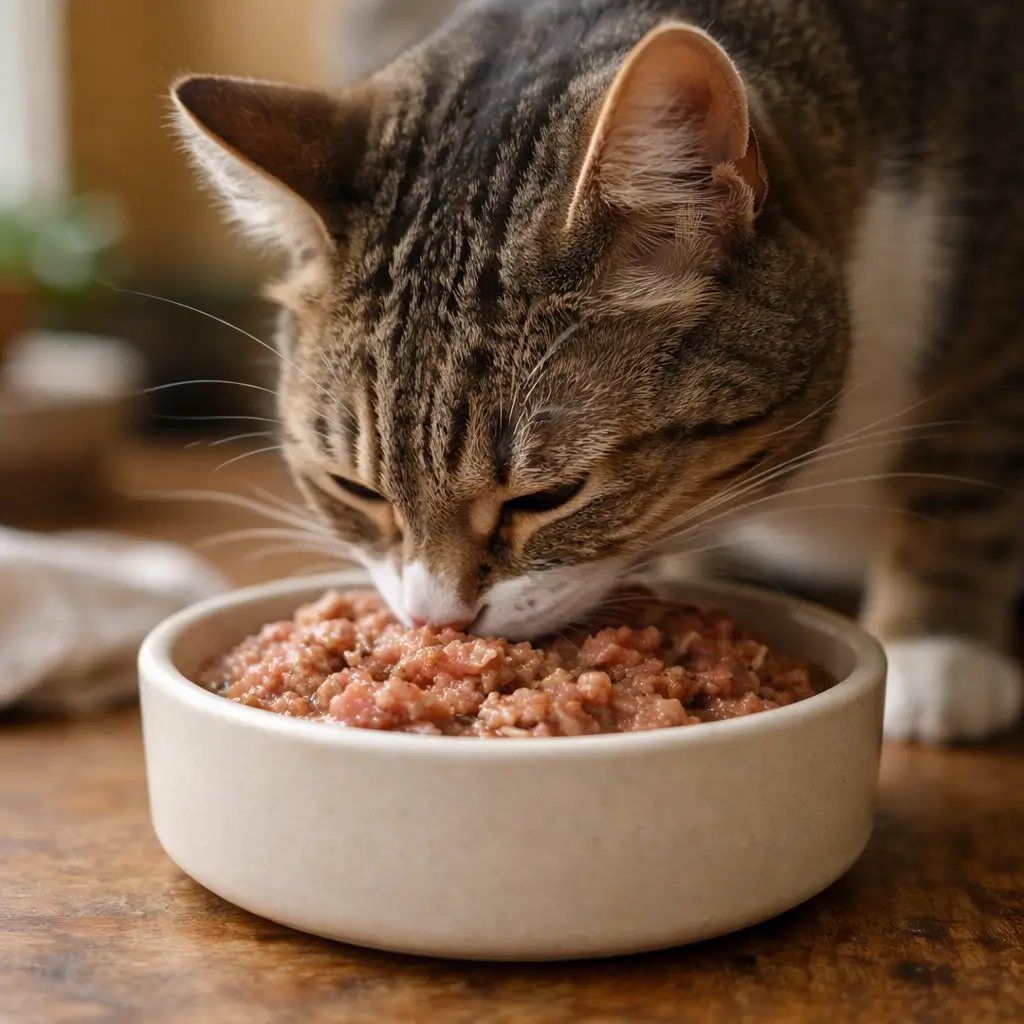
Cats are creatures of habit, and dietary changes require patience. A gradual transition over 7-14 days helps prevent digestive upset and increases acceptance.
Begin by mixing a small amount of homemade food (approximately 25%) with your cat’s current diet. Over several days, gradually increase the homemade proportion while decreasing the commercial food. Monitor for any signs of digestive disturbance—vomiting, diarrhea, or food refusal—and slow the transition if needed.
Some cats take longer than others. My own experience taught me that patience and persistence pay dividends in the long run.
Simple Complementary Treat Ideas
Beyond complete meals, occasional homemade cat treats add variety and strengthen our bond with our feline friends.
Freeze-dried meat treats require only a food dehydrator and single-ingredient proteins—chicken breast, turkey, or fish. These contain no additives and most cats find them irresistible.
Frozen broth cubes made from low-sodium, unseasoned meat broth provide hydration and enrichment, especially during warm weather.
Remember, treats should constitute no more than 10% of your cat’s daily caloric intake to maintain nutritional balance.
Conclusion: Embracing the Journey of Homemade Cat Nutrition
Learning how to make cat food recipes represents a meaningful commitment to your cat’s wellbeing. Throughout this guide, we’ve explored the essential principles of feline nutrition, the critical importance of supplementation, safe food handling practices, and practical balanced recipes you can prepare with confidence.
The journey toward homemade feeding requires education, attention to detail, and ongoing collaboration with veterinary professionals. While the effort exceeds simply opening a can or bag, the rewards—knowing exactly what nourishes your beloved companion—bring profound satisfaction.
Whether you choose to prepare complete meals, occasional nutritious cat snacks, or simply toppers to enhance commercial diets, you’re demonstrating the love and dedication that makes the human-feline bond so special. Your cat may not understand the hours of research and preparation, but they’ll certainly appreciate every delicious, wholesome bite.
Start slowly, prioritize safety, consult your veterinarian, and enjoy this rewarding aspect of cat parenthood. Your feline companion deserves nothing less than your very best efforts.