
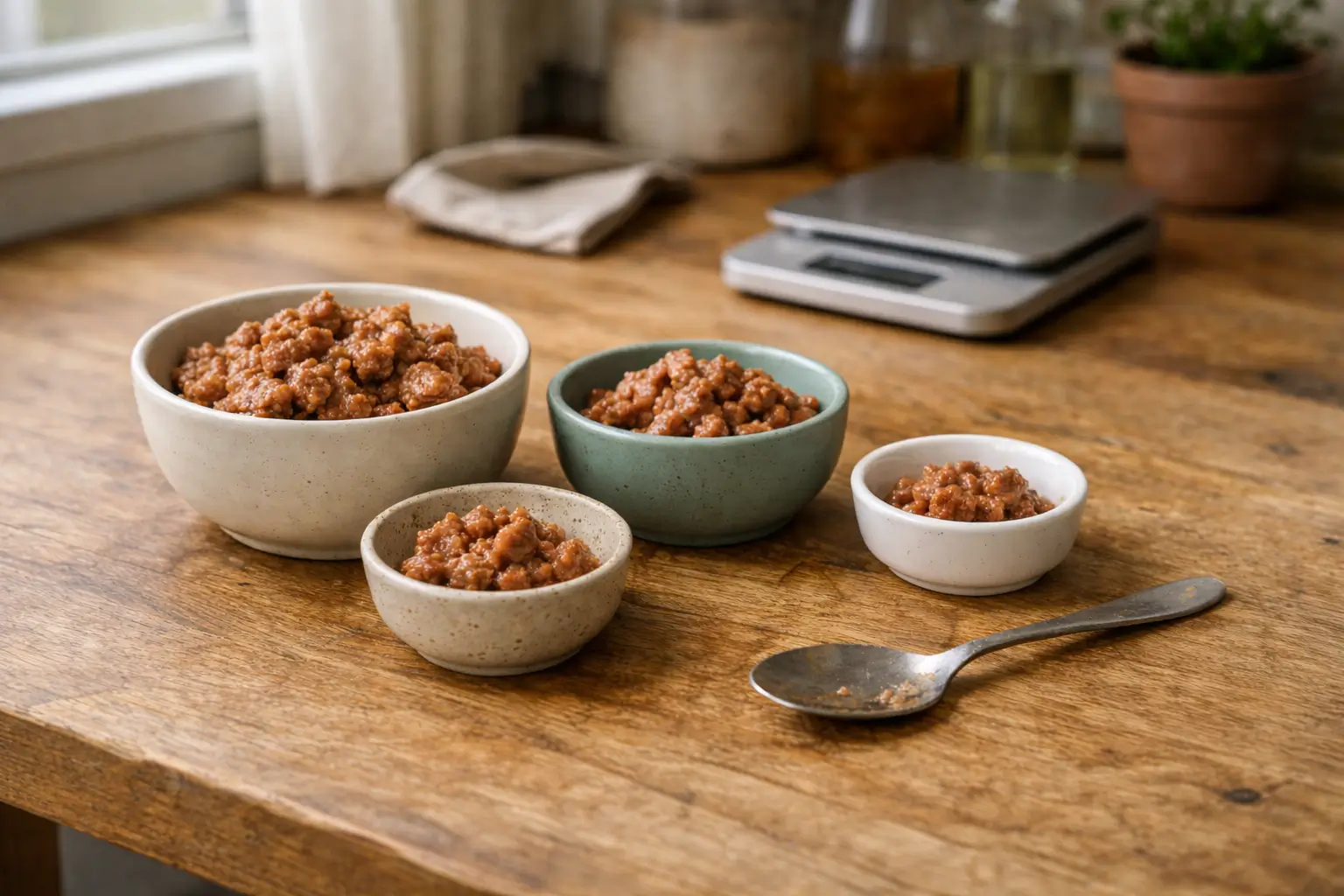
How Much Wet Food to Feed a Cat by Age

As a cat nutrition specialist who has spent over a decade helping pet parents navigate the often confusing world of feline feeding, I understand the anxiety that comes with wondering whether you’re giving your beloved companion the right amount of food. How much wet food to feed a cat isn’t just a simple question with a one-size-fits-all answer—it’s a nuanced decision that depends on your cat’s age, weight, activity level, and overall health status.
Table of Contents
I’ve seen the consequences of both overfeeding and underfeeding countless times. Overweight cats face increased risks of diabetes, joint problems, and shortened lifespans. Underfed cats, on the other hand, may develop nutritional deficiencies, muscle wasting, and weakened immune systems. The good news? With the right knowledge and a thoughtful approach, you can confidently determine the perfect portion size for your feline friend at every stage of their life.
In this comprehensive guide, I’ll walk you through everything you need to know about wet food portions, from the tiniest kitten to the distinguished senior cat curled up on your favorite chair.
What Determines How Much Wet Food to Feed a Cat?
The amount of wet food your cat needs depends primarily on their daily caloric requirements, which are calculated based on body weight, age, activity level, and metabolic health. Most adult cats require between 20-35 calories per pound of body weight daily. Since wet food typically contains 25-50 calories per ounce, a 10-pound cat generally needs 6-9 ounces of wet food per day, divided into multiple meals.
Understanding Your Cat’s Caloric Needs: The Foundation of Proper Feeding
Before we dive into specific age-based recommendations, it’s essential to understand the science behind feline nutrition. Cats are obligate carnivores, meaning their bodies are designed to derive nutrition primarily from animal-based proteins. Unlike dogs or humans, cats have unique metabolic requirements that make proper feeding both critical and somewhat complex.
Resting Energy Requirements (RER)
The foundation of calculating how much wet food to feed a cat starts with determining their Resting Energy Requirement. This is the number of calories your cat needs simply to maintain basic bodily functions while at rest. The standard formula used by veterinary nutritionists is:
RER = 70 × (body weight in kg)^0.75
For practical purposes, here’s what this translates to for cats of different weights:
- 3 kg (6.6 lb) cat: approximately 160 calories/day
- 4 kg (8.8 lb) cat: approximately 200 calories/day
- 5 kg (11 lb) cat: approximately 235 calories/day
- 6 kg (13.2 lb) cat: approximately 270 calories/day
Maintenance Energy Requirements (MER)
Your cat’s actual daily caloric needs—their Maintenance Energy Requirement—adjusts the RER based on life stage and activity level. We multiply the RER by specific factors: intact adult cats require RER × 1.4, neutered adults need RER × 1.2, active cats may need RER × 1.6, and weight loss programs typically use RER × 0.8.
Kitten Feeding Guide: Building a Strong Foundation (0-12 Months)
Kittens are not simply small cats—they’re growing machines with extraordinarily high metabolic demands. During their first year of life, kittens may need two to three times more calories per pound of body weight than adult cats. This period is crucial for proper bone development, organ growth, and establishing a healthy immune system.
Newborn to 4 Weeks: The Nursing Period
During this earliest stage, kittens should receive all their nutrition from their mother’s milk or a veterinary-approved kitten milk replacer. Wet food is not appropriate for this age group, as their digestive systems aren’t yet developed enough to process solid food.
4 to 8 Weeks: The Weaning Transition
This is when the exciting journey with wet food begins. I recommend starting with a high-quality kitten-formulated wet food, slightly warmed and mashed to a gruel-like consistency. During weaning, offer approximately 1-2 tablespoons of wet food four to six times daily, in addition to continued nursing or formula feeding.
The key during this phase is patience. Some kittens take to wet food immediately, while others need gentle encouragement. Never force-feed; instead, let your kitten explore at their own pace.
8 Weeks to 4 Months: Rapid Growth Phase
Once fully weaned, kittens enter their most intensive growth period. At this stage, your kitten feeding schedule should include three to four meals daily, with portion sizes based on their current weight and the caloric density of their food.
General guidelines for this age:
- 8-week-old kitten (0.8-1 kg): 150-200 calories daily, approximately 5-7 oz of wet food
- 12-week-old kitten (1.2-1.8 kg): 200-280 calories daily, approximately 7-10 oz of wet food
- 16-week-old kitten (1.8-2.5 kg): 250-320 calories daily, approximately 9-12 oz of wet food
Always choose wet foods specifically formulated for kittens, as these contain the higher protein levels, appropriate calcium-to-phosphorus ratios, and essential nutrients like DHA that growing cats require.
4 to 12 Months: Continued Growth and Development
As your kitten approaches adolescence, their growth rate begins to slow, but their nutritional needs remain elevated compared to adults. During this period, you can transition to two to three meals daily, though some kittens do better with smaller, more frequent feedings.
Approximate daily wet food amounts for older kittens:
- 4-6 months (2-3.5 kg): 280-380 calories daily, approximately 10-14 oz of wet food
- 6-9 months (3-4.5 kg): 300-400 calories daily, approximately 11-15 oz of wet food
- 9-12 months (3.5-5 kg): 280-350 calories daily, approximately 10-13 oz of wet food
Notice how the caloric needs per kilogram actually decrease as kittens approach their first birthday—this reflects their slowing growth rate and preparation for adult metabolism.
Adult Cat Feeding Guide: Maintaining Optimal Health (1-10 Years)
Congratulations! Your kitten has officially become an adult cat. This is when establishing consistent feeding patterns becomes particularly important, as the habits you create now will influence your cat’s health for years to come. Understanding how much wet food to feed a cat during adulthood requires balancing their energy needs with their tendency to gain weight if overfed.
Calculating Adult Cat Portions
For healthy adult cats, I recommend using the following caloric guidelines based on activity level:
Indoor, Less Active Cats:
These couch-loving companions need approximately 20 calories per pound of body weight daily. For a typical 10-pound indoor cat, this translates to roughly 200 calories per day, or about 6-8 ounces of average wet food.
Active Indoor Cats:
Cats who enjoy regular play sessions and maintain moderate activity levels need approximately 25-30 calories per pound of body weight. A 10-pound active cat would require around 250-300 calories daily, translating to 8-11 ounces of wet food.
Outdoor or Highly Active Cats:
These adventurous felines may need 30-35 calories per pound of body weight to maintain their energy. However, I always recommend keeping cats indoors for safety reasons, so consult with your veterinarian if your cat spends significant time outdoors.
Feeding Frequency for Adults
While some cat owners prefer free-feeding (leaving food out continuously), I strongly advocate for measured, scheduled meals for adult cats. This approach offers several advantages: it helps prevent obesity, allows you to monitor appetite changes that might indicate health issues, and can strengthen the bond between you and your cat.
For most adult cats, two meals per day, spaced 8-12 hours apart, works beautifully. Some cats with specific health conditions or those prone to vomiting from eating too quickly may benefit from three smaller meals.
Senior Cat Portion Sizes: Adjusting for Older Adults (7-10 Years)
As cats approach their senior years, their metabolism often begins to slow. You may notice your cat becoming less playful or spending more time sleeping. During this transitional period, I recommend reassessing your cat’s body condition every few months and adjusting portions accordingly.
Watch for signs of weight gain (difficulty feeling ribs, loss of visible waist) or weight loss (prominent spine and hip bones, visible ribs). Either extreme warrants a visit to your veterinarian and a potential adjustment in feeding amounts.
Senior Cat Feeding Guide: Nourishing the Golden Years (10+ Years)
Senior cats hold a special place in my heart. These wise companions have unique nutritional needs that differ significantly from their younger counterparts. Interestingly, while we might assume older cats need fewer calories, many senior cats actually require more calories than middle-aged adults due to decreased digestive efficiency.
Understanding Senior Cat Metabolism
Research has shown that cats over 12 years old may absorb protein and fat less efficiently than younger cats. This means that even if you’re feeding the same amount, your senior cat might not be getting the same nutritional benefit. For this reason, senior cat portion sizes often need to increase by 10-20% while maintaining close attention to weight changes.
Recommended Portions for Senior Cats
For healthy senior cats without specific medical conditions:
- 10-12 years: Maintain adult portions but monitor weight monthly
- 12-15 years: May need 10-15% more food; approximately 25-30 calories per pound of body weight
- 15+ years: Individual assessment essential; some cats need significant increases while others require less due to reduced activity
Health Considerations for Senior Feeding
This is where I must include some critical warnings that every senior cat owner should understand.
⚠️ Kidney Disease Warning: Chronic kidney disease is extremely common in older cats. High-protein diets can be harmful for cats with compromised kidney function. If your senior cat has been diagnosed with kidney disease, work with your veterinarian to determine appropriate protein levels and portion sizes. Never switch to a kidney-friendly diet without professional guidance.
⚠️ Pancreatitis Warning: Cats with pancreatitis or a history of this condition should avoid high-fat foods, as dietary fat can trigger painful flare-ups. Senior cats are more susceptible to pancreatic issues, so discuss fat content with your vet.
⚠️ Hyperthyroidism Note: An overactive thyroid can cause increased appetite alongside weight loss. If your senior cat seems constantly hungry but is losing weight, seek veterinary evaluation promptly.
Wet Food Calorie Variations: Why Labels Matter
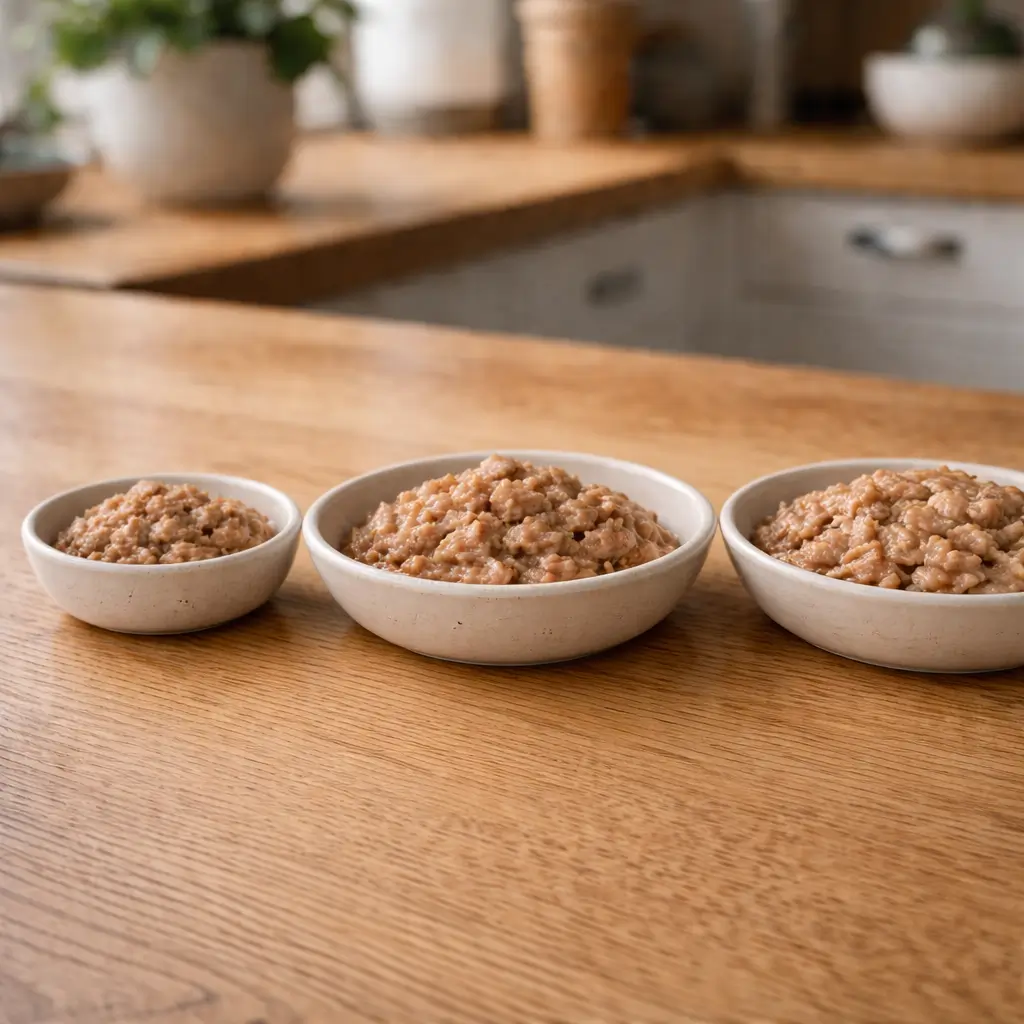
One of the most common mistakes I see cat owners make is assuming all wet foods are created equal. In reality, the caloric density of wet cat food can vary dramatically—from as low as 20 calories per ounce to over 50 calories per ounce.
Reading and Understanding Labels
The caloric content of your cat’s food should be listed on the packaging, typically expressed as “kcal/kg” or “kcal/can.” Here’s how to use this information:
Step 1: Find the caloric content per can or per 100 grams.
Step 2: Determine your cat’s daily caloric needs using the guidelines above.
Step 3: Divide your cat’s daily caloric needs by the calories per serving to determine how much food to offer.
Typical Caloric Ranges by Food Type
Pâté-style wet foods tend to be more calorie-dense, averaging 180-250 calories per 5.5 oz can. These are often ideal for cats who need to maintain or gain weight.
Shreds, chunks, or flaked wet foods in gravy typically contain more moisture and fewer calories per volume—often 80-150 calories per 5.5 oz can. These can be helpful for cats prone to weight gain or those needing extra hydration.
Broths and toppers are not complete meals and usually contain minimal calories (10-30 per serving). Never rely on these as primary nutrition.
Case Study: Calculating Portions for a Homemade Wet Food Recipe
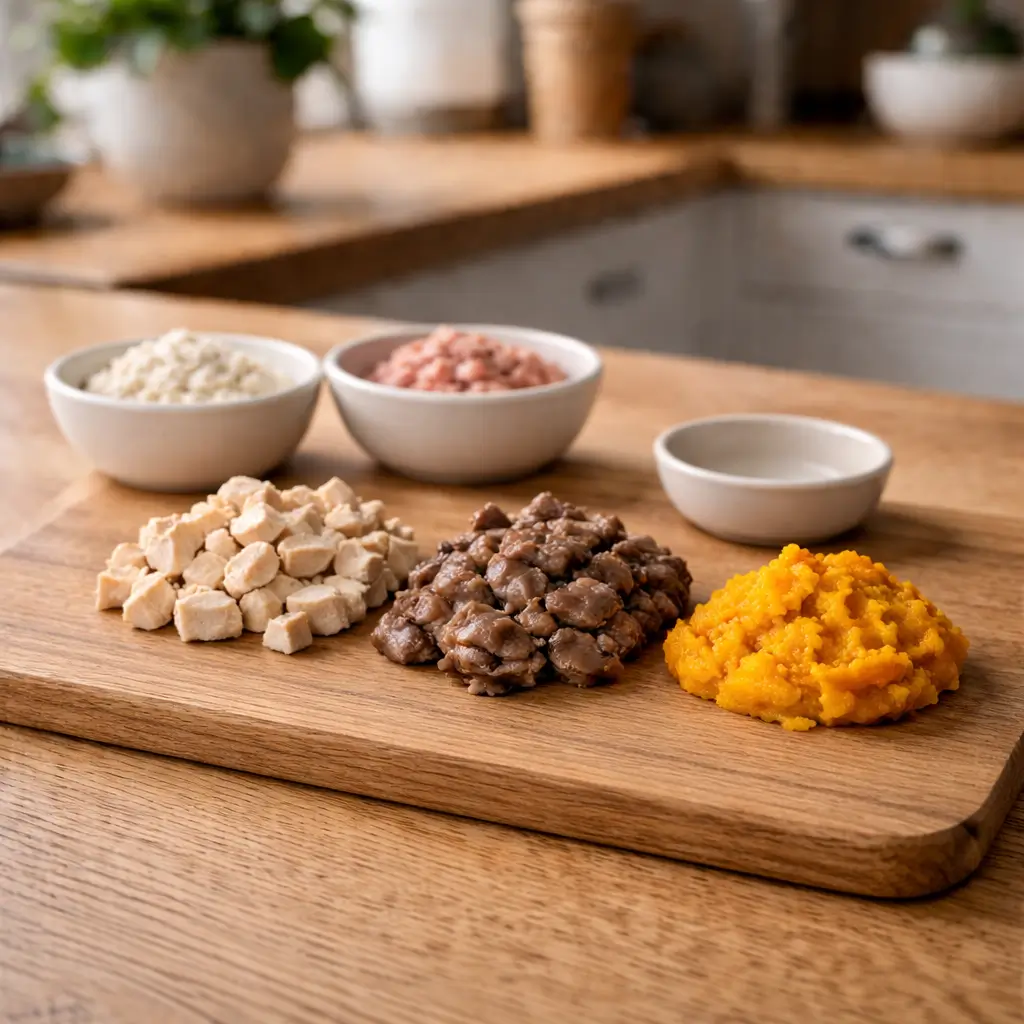
Understanding portion control becomes even more critical when preparing homemade cat food. While I generally recommend commercial diets for their guaranteed nutritional completeness, some cat owners prefer or need to prepare food at home. Here’s a practical example of how to calculate how much wet food to feed a cat when using a homemade recipe.
Balanced Homemade Chicken Recipe (Verified Complete Meal)
Important Disclaimer: This recipe is designed to be nutritionally complete when supplements are included exactly as specified. Homemade diets without proper supplementation can cause severe nutritional deficiencies. Always consult with a veterinary nutritionist before switching to homemade feeding.
Ingredients:
- 450 g (1 lb) boneless, skinless chicken thighs (raw weight)
- 30 g (1 oz) chicken liver
- 50 g (approximately ¼ cup) cooked pumpkin (plain, not pie filling)
- 1 teaspoon fish oil (providing omega-3 fatty acids)
- Calcium supplement: 1,000 mg calcium carbonate OR finely ground eggshell (½ teaspoon)
- Taurine supplement: 250 mg
- Vitamin E supplement: 100 IU
- Vitamin B complex: as directed on pet-specific supplement
- Iodized salt: small pinch (1/16 teaspoon)
- Water: 60-90 ml (¼ to ⅓ cup) for moisture
Preparation Steps:
Begin by weighing all ingredients precisely—accuracy is essential for nutritional balance. Cook the chicken thighs and liver by baking at 350°F (175°C) for 25-30 minutes until fully cooked with no pink remaining. Allow the meat to cool completely before handling.
Chop or grind the cooked meat to your cat’s preferred texture. Some cats prefer finely ground food, while others enjoy small chunks. Combine the meat with the cooked pumpkin and mix thoroughly.
Add all supplements and mix completely to ensure even distribution throughout the food. Add water to achieve a wet food consistency and enhance palatability. Store in airtight containers, refrigerating portions for up to 3 days or freezing for up to 3 months.
Caloric Content Calculation
Now, here’s the crucial part that connects this recipe to our main question of portion sizing:
Caloric breakdown of this recipe:
- Chicken thighs (450g): approximately 860 calories
- Chicken liver (30g): approximately 40 calories
- Pumpkin (50g): approximately 13 calories
- Fish oil (1 tsp): approximately 40 calories
Total recipe yield: approximately 550g of finished food containing roughly 953 calories
Caloric density: approximately 173 calories per 100g
Feeding Guidelines for This Specific Recipe
Using our caloric calculations, here’s exactly how much of this homemade food different cats would need:
For a 4 kg (8.8 lb) active adult cat requiring approximately 240 calories daily:
Feed approximately 140g (5 oz) per day, divided into two meals of 70g each.
For a 5 kg (11 lb) moderately active adult cat requiring approximately 260 calories daily:
Feed approximately 150g (5.3 oz) per day, divided into two meals of 75g each.
For a 3 kg (6.6 lb) senior cat requiring approximately 200 calories daily:
Feed approximately 115g (4 oz) per day, divided into two or three meals.
This calculation method applies to any wet food—simply determine the caloric density and divide your cat’s daily needs accordingly.
Foods to Avoid: Protecting Your Cat’s Health
While discussing feeding amounts, I must emphasize that quantity is irrelevant if you’re offering harmful foods. Certain human foods are toxic to cats and should never be included in their diet, regardless of age:
Absolutely Toxic Foods:
Onions, garlic, chives, and leeks contain compounds that damage red blood cells, causing anemia. Grapes and raisins can cause kidney failure. Chocolate contains theobromine, which is poisonous to cats. Alcohol, caffeine, and xylitol (artificial sweetener) are all potentially fatal.
Common Allergens to Watch:
Some cats develop allergies to specific proteins. Chicken and fish are among the most common allergens in feline diets, despite being popular ingredients. If your cat experiences itching, digestive upset, or chronic ear infections, consider an elimination diet under veterinary supervision.
Practical Tips for Successful Wet Food Feeding
After years of working with cat owners, I’ve gathered several practical strategies that make portion control easier and more effective.
Invest in a Kitchen Scale
Eyeballing portions leads to inconsistency. A simple digital kitchen scale allows you to measure exact amounts, making adjustments easier and ensuring your cat receives consistent nutrition.
Monitor Body Condition Monthly
Rather than focusing solely on the number on the scale, learn to assess your cat’s body condition score. You should be able to feel (but not prominently see) your cat’s ribs. When viewed from above, your cat should have a visible waist behind the ribs.
Keep a Feeding Journal
Especially when making dietary changes, tracking how much you feed and any changes in your cat’s weight, energy, or stool quality can help you and your veterinarian make informed decisions.
Adjust for Treats
If you give treats, their calories count toward your cat’s daily total. Reduce meal portions accordingly, ensuring treats never exceed 10% of daily caloric intake.
When to Consult Your Veterinarian
While this guide provides comprehensive general information about how much wet food to feed a cat, certain situations require professional guidance. Schedule a veterinary nutrition consultation if your cat is significantly over or underweight, has been diagnosed with any chronic health condition, shows sudden changes in appetite or weight, is pregnant or nursing, or you’re considering switching to a homemade diet.
Your veterinarian can provide personalized recommendations based on your individual cat’s health status, bloodwork results, and specific nutritional needs.
Conclusion: Nourishing Your Cat at Every Life Stage
Determining how much wet food to feed a cat is both an art and a science. While the guidelines I’ve provided offer a solid foundation, remember that every cat is an individual. What works perfectly for one feline may need adjustment for another.
The key principles to remember are these: calculate caloric needs based on weight and activity level, choose age-appropriate formulations, divide daily portions into multiple meals, monitor body condition regularly, and adjust as needed throughout your cat’s life. Kittens need calorie-dense foods fed frequently, adults require consistent measured meals to prevent obesity, and seniors deserve careful attention to their changing metabolic needs.
By taking the time to understand your cat’s nutritional requirements and measuring portions thoughtfully, you’re giving your companion one of the greatest gifts possible: the foundation for a long, healthy, and vibrant life. Your cat may not be able to thank you in words, but their bright eyes, glossy coat, and enthusiastic purrs will say everything you need to hear.