
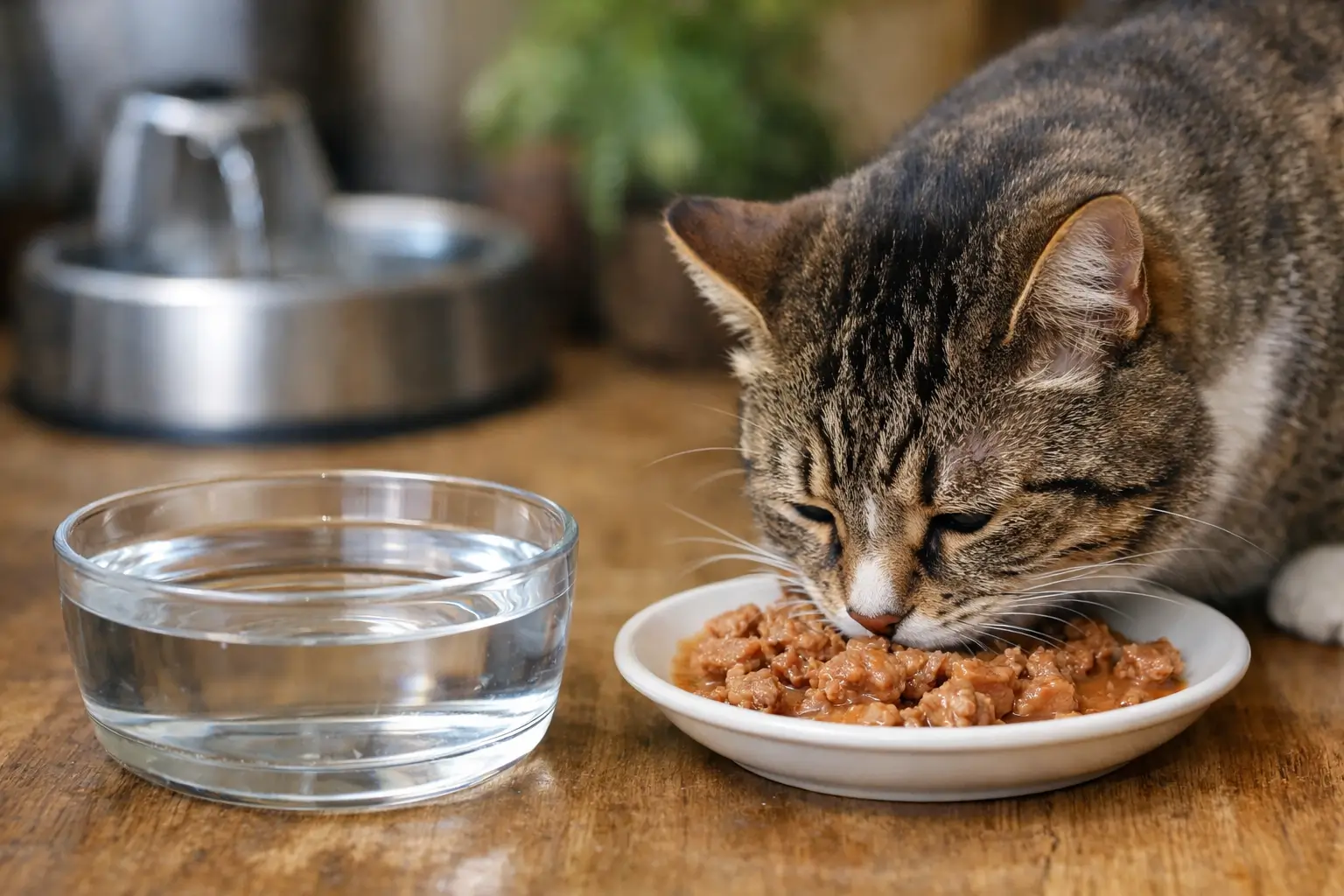
Why My Cat Doesn’t Drink Water but Eats Wet Food

If you’ve found yourself staring at your cat’s untouched water bowl while they happily devour their wet food, you’re not alone—and I want you to take a deep breath. The worry that creeps in when you notice my cat doesn’t drink water but eats wet food is completely understandable. We love our feline companions, and any change in their behavior can send us spiraling into concern. But here’s what I’ve learned after years of studying feline health and nutrition: this behavior is often completely normal, and there’s fascinating biology behind it.
Table of Contents
In this comprehensive guide, I’m going to walk you through exactly why your cat might be skipping the water bowl, how to determine if they’re actually getting enough hydration, and when you genuinely need to be concerned. By the end, you’ll feel confident in understanding your cat’s unique hydration needs and equipped with practical tools to monitor their health at home.
Is It Normal if My Cat Doesn’t Drink Water but Eats Wet Food?
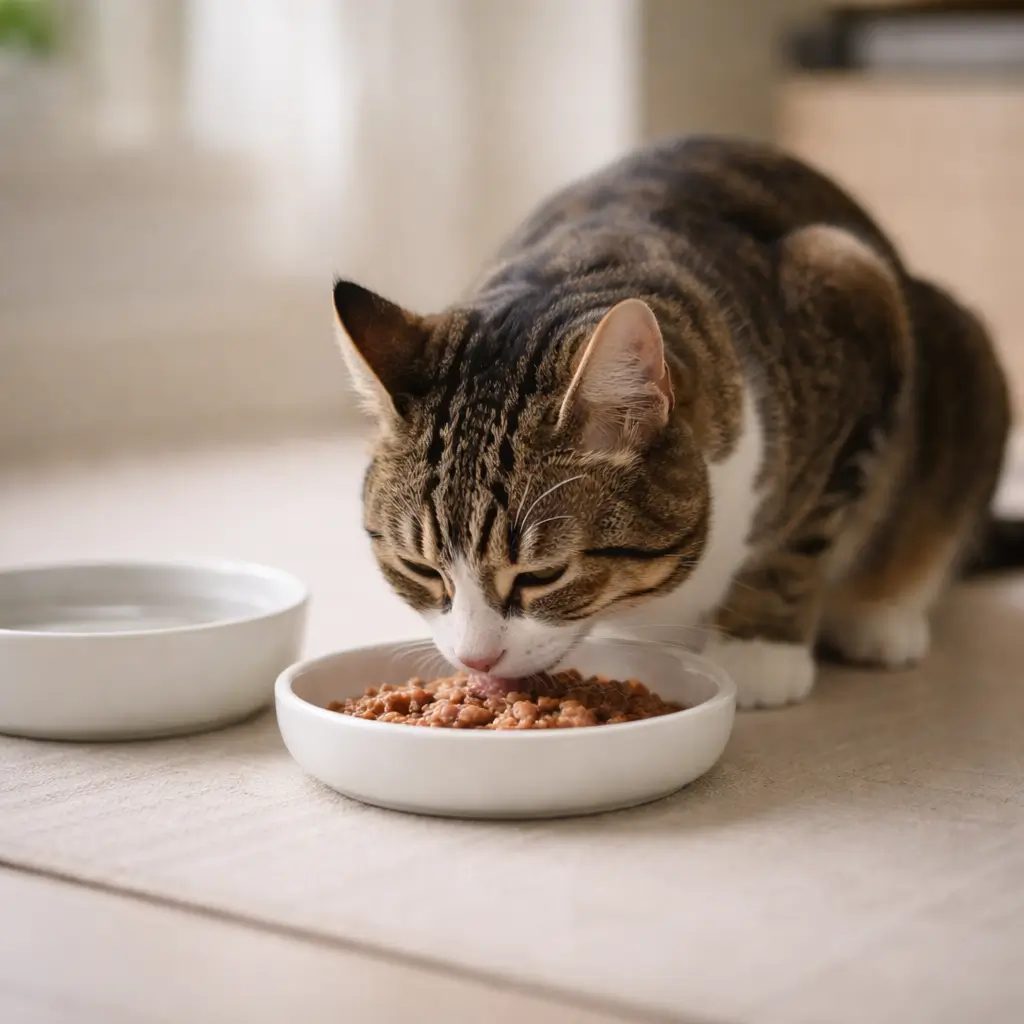
Yes, it is often completely normal. Wet cat food contains approximately 70-80% water, which provides the majority of your cat’s daily hydration needs. Unlike cats eating dry kibble (which contains only about 10% moisture), cats on a wet food diet naturally drink significantly less water from their bowl because they’re already getting it from their meals.
This isn’t a sign of illness—it’s actually your cat’s biology working exactly as nature intended. Let me explain why.
The Desert Origins: Why Cats Have a Low Thirst Drive
To understand your cat’s relationship with water, we need to travel back thousands of years to the arid regions of the Middle East and North Africa. The domestic cat’s ancestor, the African wildcat (Felis lybica), evolved in desert environments where water sources were scarce and unreliable. Survival depended not on finding water holes, but on extracting moisture from prey.
These ancient cats obtained nearly all their hydration from the bodies of the small rodents, birds, and lizards they hunted. A mouse, for instance, is roughly 70% water—almost identical to the moisture content in your cat’s canned food. Over countless generations, cats developed a remarkably efficient metabolism that requires less water than many other mammals, and their thirst drive became correspondingly weak.
This evolutionary heritage lives on in your house cat today. Unlike dogs, who will eagerly lap up water throughout the day, cats simply don’t feel compelled to drink frequently. Their kidneys evolved to concentrate urine efficiently, allowing them to survive on minimal water intake. When you feed your cat wet food, you’re essentially mimicking their ancestral diet, and their body responds by recognizing that additional water isn’t necessary.
Wet Food vs. Dry Food: The Moisture Math
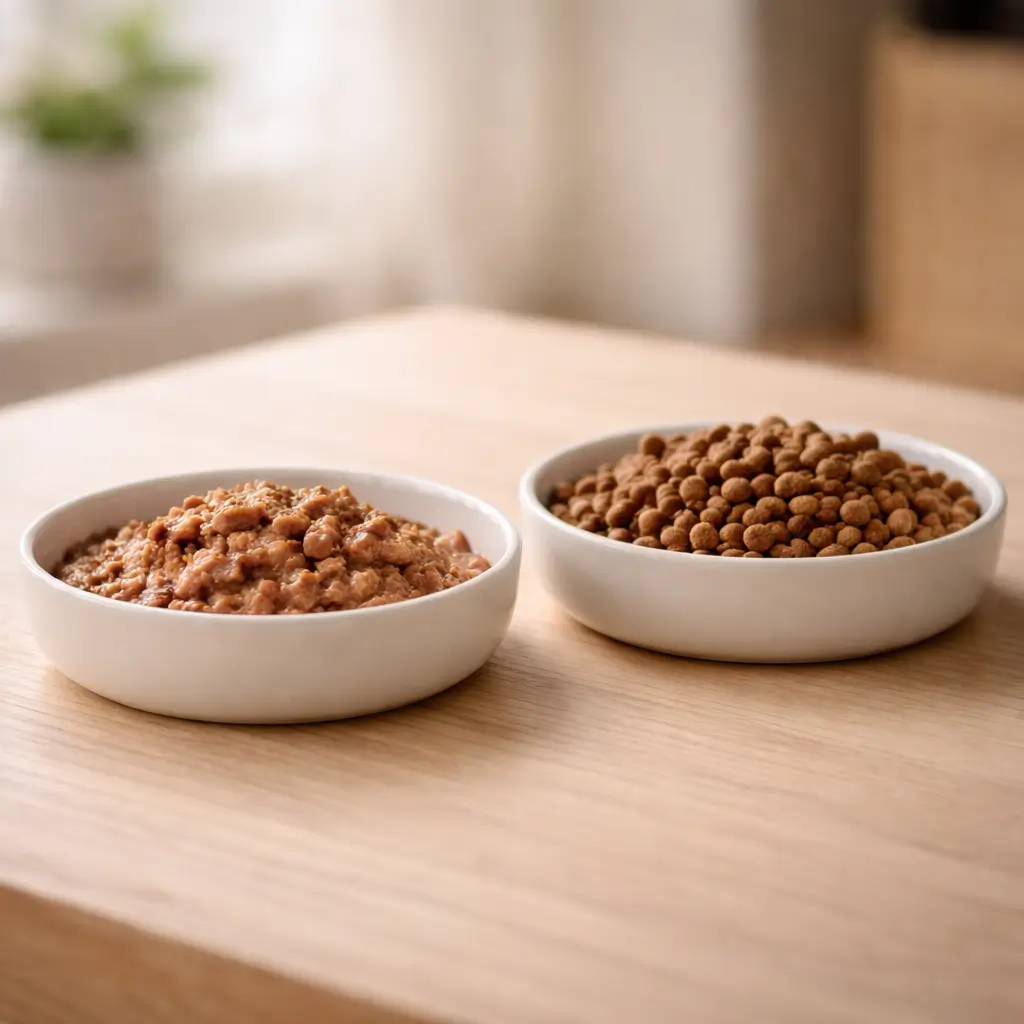
The difference in water content between wet and dry cat food is dramatic, and understanding these numbers helps explain why feeding style has such a profound impact on drinking behavior.
Wet cat food typically contains between 70% and 80% moisture. This means that in a standard 5.5-ounce (156-gram) can of wet food, your cat is consuming approximately 109 to 125 grams of water—that’s nearly half a cup of liquid hidden in their meal.
Dry kibble, by contrast, contains only about 6% to 10% moisture. A cat eating exclusively dry food must drink significantly more water from external sources to meet their hydration needs. This is why cats on kibble-only diets are often seen drinking more frequently.
When your cat is thriving on wet food and ignoring their water bowl, they’re not being stubborn or strange. They’re simply responding to the signals their body is sending: I’ve already consumed enough water today. It’s efficient, it’s natural, and it’s a testament to their remarkable evolutionary adaptation.
The Math of Feline Hydration: How Much Water Does Your Cat Actually Need?
Understanding the numbers behind feline hydration can provide tremendous peace of mind. While individual needs vary based on activity level, environmental temperature, and overall health, veterinary guidelines offer helpful benchmarks.
A healthy adult cat requires approximately 50 milliliters of water per kilogram of body weight per day. For a typical 4-kilogram (roughly 9-pound) cat, this translates to about 200 milliliters (or roughly ¾ cup) of total daily water intake—from all sources combined.
Now let’s do the math for a cat eating wet food. If your 4-kilogram cat eats two 5.5-ounce cans of wet food daily (a common portion for an adult cat), they’re consuming approximately 218 to 250 grams of water just from their meals. That already meets or exceeds their daily requirement, with no need to visit the water bowl at all.
Compare this to a cat eating only dry kibble. That same cat would receive only about 15 to 25 milliliters of water from their food, leaving them needing to drink nearly their entire water requirement independently. This is why cats on dry food must drink considerably more—and why the switch to wet food often correlates with dramatically reduced water bowl visits.
If your cat occasionally takes a few laps of water throughout the day while eating wet food, consider it a bonus. But if they walk right past the bowl? They’re likely meeting their needs through their diet, exactly as their ancestors did.
Why Cats on Wet Food Drink Less: Additional Factors
Beyond the fundamental moisture content of their food, several other factors influence your cat’s drinking behavior that are worth understanding.
Cats are notoriously particular about their water. In the wild, stagnant water can harbor bacteria and parasites, so cats evolved a preference for fresh, moving water sources. Your cat might be avoiding their water bowl not because they’re not thirsty, but because the water isn’t appealing to them. The bowl might be too close to their food (cats instinctively prefer to drink away from their “kill”), the water might not be fresh enough, or they simply prefer the motion of running water.
Additionally, some cats are what we might call “stealth drinkers.” They take small, infrequent sips when no one is watching—perhaps from a dripping faucet, a houseplant saucer, or even condensation on a window. Just because you don’t see your cat drinking doesn’t mean they never do.
Temperature also plays a role. Cats in cooler environments or those with less active lifestyles naturally require less water than active cats in warm homes. If your indoor cat spends most of their day napping in climate-controlled comfort, their hydration needs may be on the lower end of the spectrum.
Medical Warnings: When Reduced Drinking Becomes a Red Flag
While reduced water intake is typically normal for cats on wet food diets, there are specific warning signs that warrant immediate veterinary attention. I want to be very clear about the distinction between normal behavior and genuine medical emergencies.
True Red Flags That Require a Vet Visit
You should contact your veterinarian promptly if you observe any of the following in addition to not drinking water:
Your cat stops eating their wet food. Loss of appetite is one of the most significant warning signs in cats. When a cat who normally enjoys their meals suddenly refuses food, something is wrong. Since wet food provides both calories and hydration, a cat who stops eating is at risk of both malnutrition and dehydration.
Your cat shows signs of lethargy or weakness. A healthy cat may sleep much of the day, but they should still have periods of alertness, curiosity, and normal activity. If your cat seems unusually weak, unresponsive, or unwilling to move, this requires immediate attention.
Vomiting or diarrhea persists beyond a single episode. While occasional vomiting isn’t uncommon in cats, repeated episodes quickly lead to fluid loss and electrolyte imbalances. Diarrhea is equally concerning, as it accelerates dehydration significantly.
Your cat is hiding more than usual. Cats instinctively hide when they feel unwell. If your normally social cat suddenly retreats to isolated spots and resists interaction, take it seriously.
You notice changes in urination. Straining to urinate, crying in the litter box, producing very small amounts of urine, or blood in the urine are all urgent symptoms—particularly in male cats, who can develop life-threatening urinary blockages.
A Critical Clarification: Kidney Disease and Diabetes
I want to address a common point of confusion. Many cat owners worry that their cat’s lack of drinking indicates kidney disease or diabetes. In reality, these conditions typically cause the opposite pattern: excessive drinking and urination, not reduced drinking.
Cats with chronic kidney disease or diabetes mellitus often become noticeably thirstier, seeking out water more frequently and sometimes drinking from unusual sources. If your cat is drinking dramatically more than usual—emptying their water bowl daily, seeking out faucets or toilets, or urinating more frequently—that’s actually more concerning than drinking less.
A cat who isn’t drinking much but is eating well, acting normally, and producing regular amounts of urine is unlikely to have these conditions. However, if you have any concerns about your cat’s kidney or metabolic health, a simple blood test at your veterinarian can provide clarity and peace of mind.
Home Health Check: How to Assess Your Cat’s Hydration
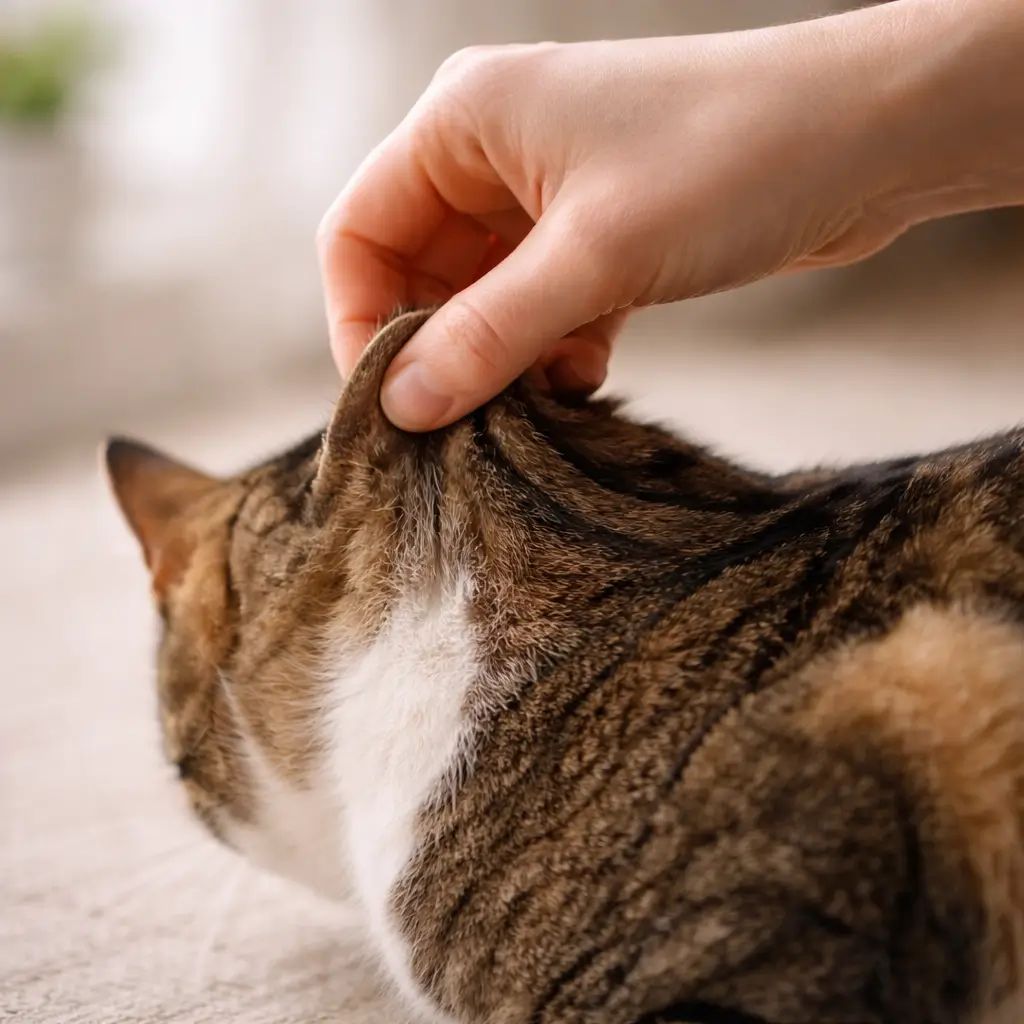
Even with the reassurance that reduced drinking is often normal, I understand the desire to verify that your cat is properly hydrated. Fortunately, there are simple checks you can perform at home to assess your cat’s hydration status. These techniques are the same ones veterinarians use during physical examinations.
The Skin Tent Test (Skin Turgor Assessment)
This is the most commonly recommended at-home hydration check, and it’s easy to perform once you know what to look for.
Gently grasp the skin at the scruff of your cat’s neck—the loose skin between their shoulder blades. Lift it slightly to create a small “tent” of skin, then release it. In a well-hydrated cat, the skin should snap back into its normal position almost immediately, typically within one to two seconds. If your cat is dehydrated, the skin will return to position slowly, remaining “tented” for several seconds or longer.
A few caveats are worth noting. Very young kittens and older cats may have naturally different skin elasticity, which can affect this test’s accuracy. Overweight cats may also show slower skin return due to the nature of their subcutaneous tissue rather than dehydration. Use this test as one piece of information, not a definitive diagnosis.
The Gum Check (Capillary Refill and Moisture Assessment)
Your cat’s gums provide valuable information about their hydration and circulation. With clean hands, gently lift your cat’s lip to expose their gums—the area above their teeth.
Healthy, well-hydrated gums should feel moist and slippery, similar to the inside of your own cheek. The color should be a healthy pink (though some cats naturally have pigmented gums). If your cat’s gums feel sticky, tacky, or dry, this may indicate dehydration.
You can also check capillary refill time by pressing gently on the gum with your finger until the pink color blanches to white, then releasing. The color should return within one to two seconds. Delayed refill time can indicate dehydration or circulation problems.
Monitoring Litter Box Output
Perhaps the most practical indicator of adequate hydration is your cat’s urination. A well-hydrated cat should produce urine regularly, and you should see consistent clumps in their litter box (if using clumping litter). While the frequency varies between cats, most healthy adult cats urinate two to four times daily.
If you notice significantly reduced urine output, very small clumps, or no urination for 24 hours or more, contact your veterinarian regardless of your cat’s eating and drinking behavior. Urinary issues can escalate quickly and require prompt attention.
Hydration Hacks: Simple Ways to Encourage More Fluid Intake
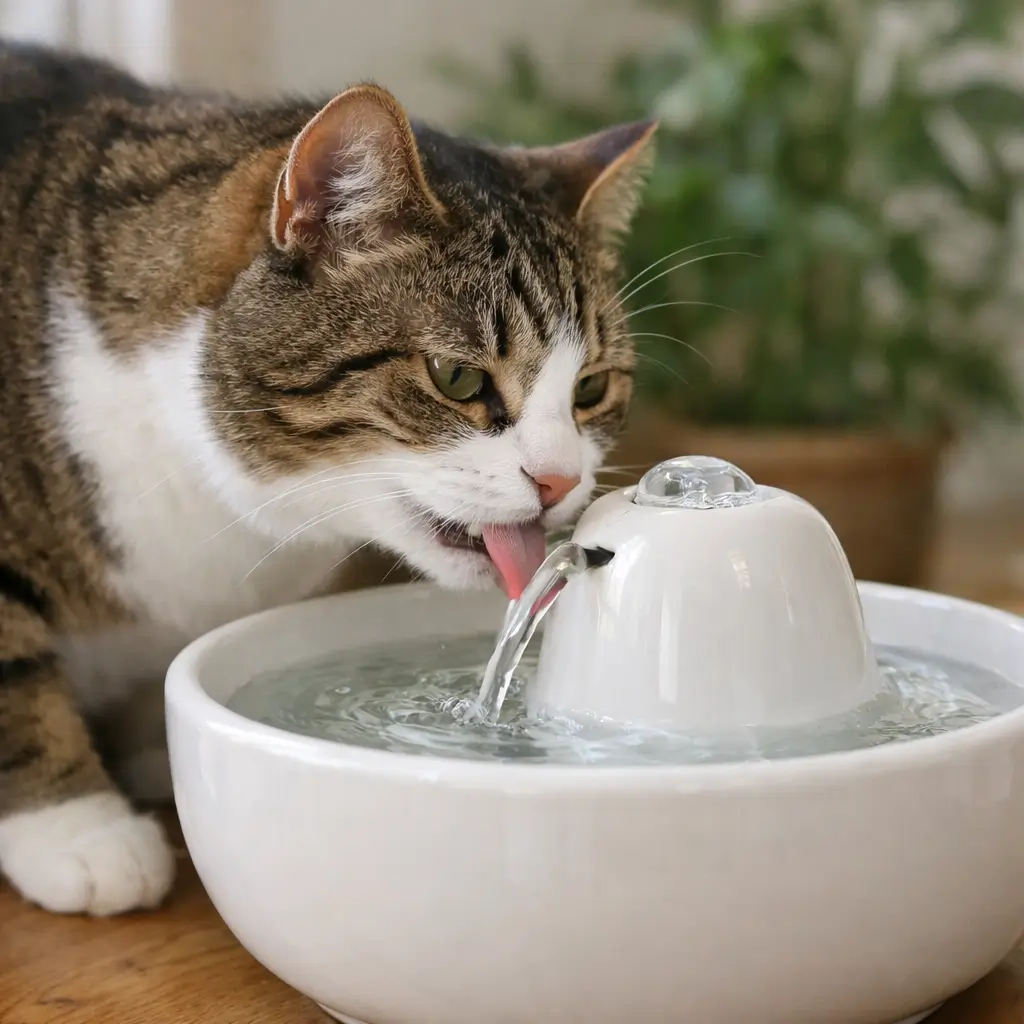
Even if your cat’s hydration status is perfectly healthy, there’s no harm in encouraging additional fluid intake—especially if it eases your worry. Here are veterinarian-approved strategies to boost your cat’s hydration without stress.
Create a “Soup” with Their Wet Food
One of the simplest methods is to add extra water directly to your cat’s wet food. Warm a small amount of water (not hot—just slightly warm to enhance the aroma) and mix it thoroughly into their meal. Many cats enjoy this “gravy” consistency, and it can add significant fluid intake without changing their diet.
Start with just a tablespoon or two and gradually increase based on your cat’s acceptance. Some cats prefer a thick consistency, while others happily lap up a more brothy mixture.
Invest in a Cat Water Fountain
Remember that evolutionary preference for moving water I mentioned? A cat water fountain addresses this instinct directly. The continuous circulation keeps water fresh, oxygenated, and appealing. Many cats who ignore a stagnant bowl become enthusiastic drinkers when offered a fountain.
When selecting a fountain, look for models that are easy to clean (bacterial buildup defeats the purpose), relatively quiet (some cats are startled by loud motors), and made of cat-safe materials like stainless steel or ceramic rather than plastic.
Strategic Bowl Placement
Cats prefer to drink away from their food source—a holdover from wild instincts to avoid contaminated water near a kill. Try placing water bowls in several locations around your home, away from food dishes and litter boxes. Experiment with different rooms and surfaces to discover your cat’s preferences.
Ice Cube Enrichment
Some cats find ice cubes fascinating. The movement of a cube floating in water can trigger playful interaction and incidental drinking. You can also add a plain ice cube to their water bowl on warm days to keep it fresh and cool longer.
Wide, Shallow Bowls
Many cats dislike the sensation of their whiskers touching the sides of a deep bowl (a phenomenon sometimes called “whisker fatigue” or whisker stress). Wide, shallow dishes allow cats to drink comfortably without their sensitive whiskers brushing against the edges.
A Safe Hydration Treat Recipe: Homemade Chicken Broth
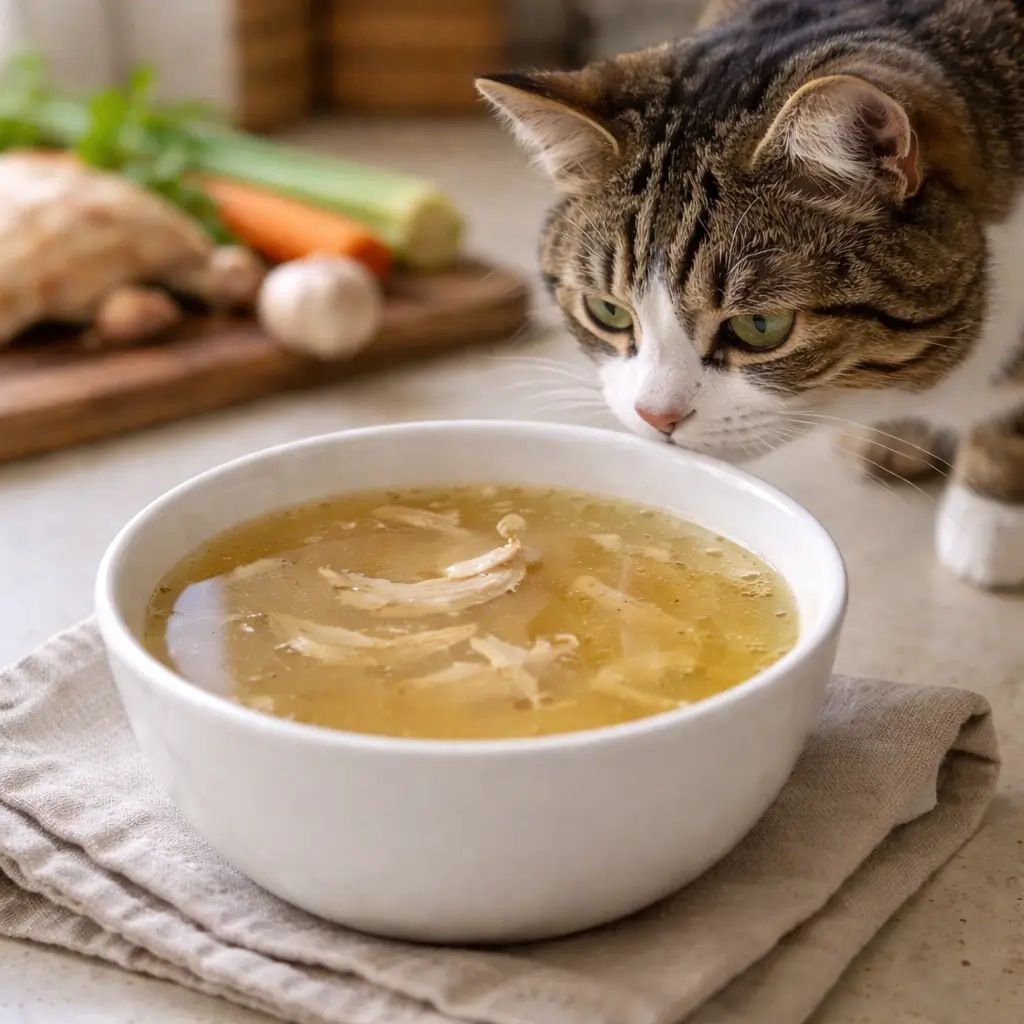
If you’d like to offer your cat an extra-special hydration boost, homemade bone broth is a safe and enticing option. The key is ensuring it contains absolutely no ingredients toxic to cats.
Cat-Safe Bone Broth Recipe
Ingredients: Chicken bones (from a whole chicken, or just wings and backs), enough water to cover, nothing else.
What to avoid absolutely: Onions, garlic, chives, leeks, salt, pepper, or any seasonings. These are all toxic or harmful to cats.
Instructions: Place chicken bones in a large pot and cover with water. Bring to a boil, then reduce heat and simmer for several hours (anywhere from 2 to 6 hours). The longer you simmer, the more flavorful and nutritious the broth becomes. Allow the broth to cool completely, then strain out all bones and solid pieces—never give your cat cooked bones, as they can splinter dangerously. Skim off excess fat from the surface. Store in the refrigerator for up to five days, or freeze in ice cube trays for longer storage.
Serving: Offer a small amount (a few tablespoons) as an occasional treat alongside their regular diet, or drizzle it over their wet food. You can also freeze the broth into cubes and offer them as a hydrating, enriching activity.
Why this works: The savory aroma and taste entice cats to consume more liquid without adding significant calories to their diet. It’s essentially flavored water that appeals to their carnivorous palate.
Conclusion: When in Doubt, Trust Your Instincts and Your Veterinarian
If you’ve been worried because my cat doesn’t drink water but eats wet food, I hope this article has provided the reassurance and understanding you needed. In most cases, this behavior is perfectly normal—a reflection of your cat’s efficient biology and the high moisture content of their diet. Cats evolved as desert hunters who obtained hydration from their prey, and wet food mimics this ancestral pattern beautifully.
The key takeaways to remember are straightforward. Wet food contains 70-80% water, often meeting or exceeding your cat’s daily hydration needs. Cats have a naturally low thirst drive compared to other animals. A cat eating wet food, acting normally, and urinating regularly is likely perfectly healthy. Warning signs to watch for include loss of appetite, lethargy, vomiting, diarrhea, hiding, and changes in urination—not simply reduced water bowl visits.
Perform the skin tent test and gum check periodically for peace of mind, and consider hydration strategies like water fountains or food “soup” if you’d like to encourage additional fluid intake.
Above all, trust your instincts as a cat owner. You know your cat’s normal behavior better than anyone. If something feels genuinely wrong, a veterinary visit is always worthwhile—both for your cat’s health and your own peace of mind. A simple physical exam and basic blood work can confirm that your cat is thriving, allowing you to relax and enjoy your time together without worry.
Your cat’s relationship with their water bowl might be casual, but your attention to their well-being is anything but—and that attentiveness makes you an excellent guardian for your feline friend.