
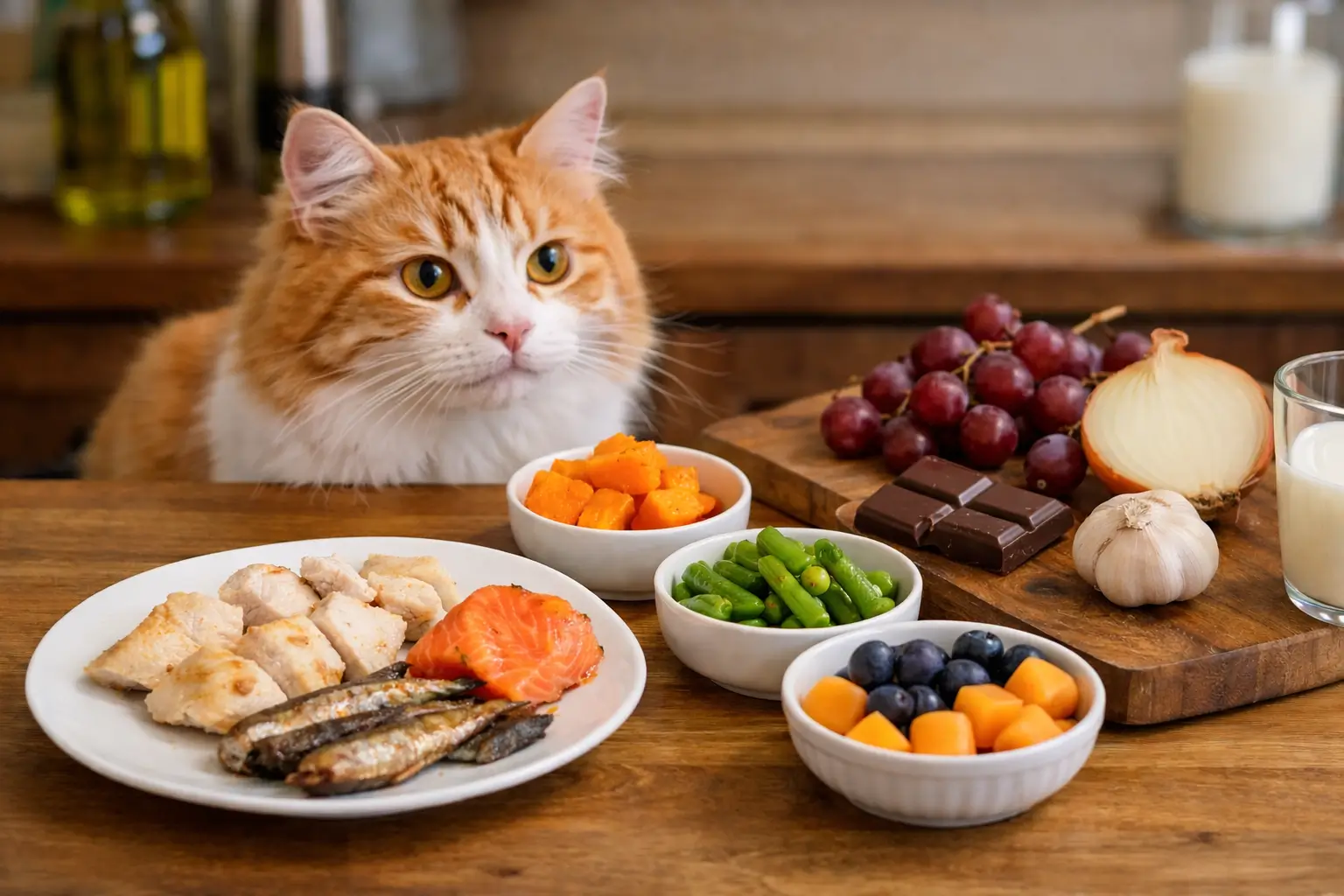
What Foods Can Cats Eat? Safe vs Toxic Guide

Every cat owner knows the scene: you’re preparing dinner, and a pair of luminous eyes tracks your every movement. A soft paw reaches toward your plate. A plaintive meow suggests your feline companion is surely starving, despite the full food bowl in the corner. The temptation to share a morsel is irresistible—but before you do, you need to know what foods can cats eat safely.
Table of Contents
Understanding which human foods are safe for cats isn’t just about being a generous pet parent; it’s about protecting your beloved companion from potentially life-threatening dangers lurking in everyday ingredients. While cats are obligate carnivores with specific nutritional needs, many human foods can serve as healthy supplements to their diet—and others can send them straight to the emergency veterinarian.
This comprehensive guide will walk you through everything you need to know about human foods safe for cats, toxic foods for cats that must be avoided at all costs, and how to safely prepare healthy cat snacks at home. Whether you’re looking to add variety to your cat’s diet or simply want to know if that piece of chicken is safe to share, you’ll find your answers here.
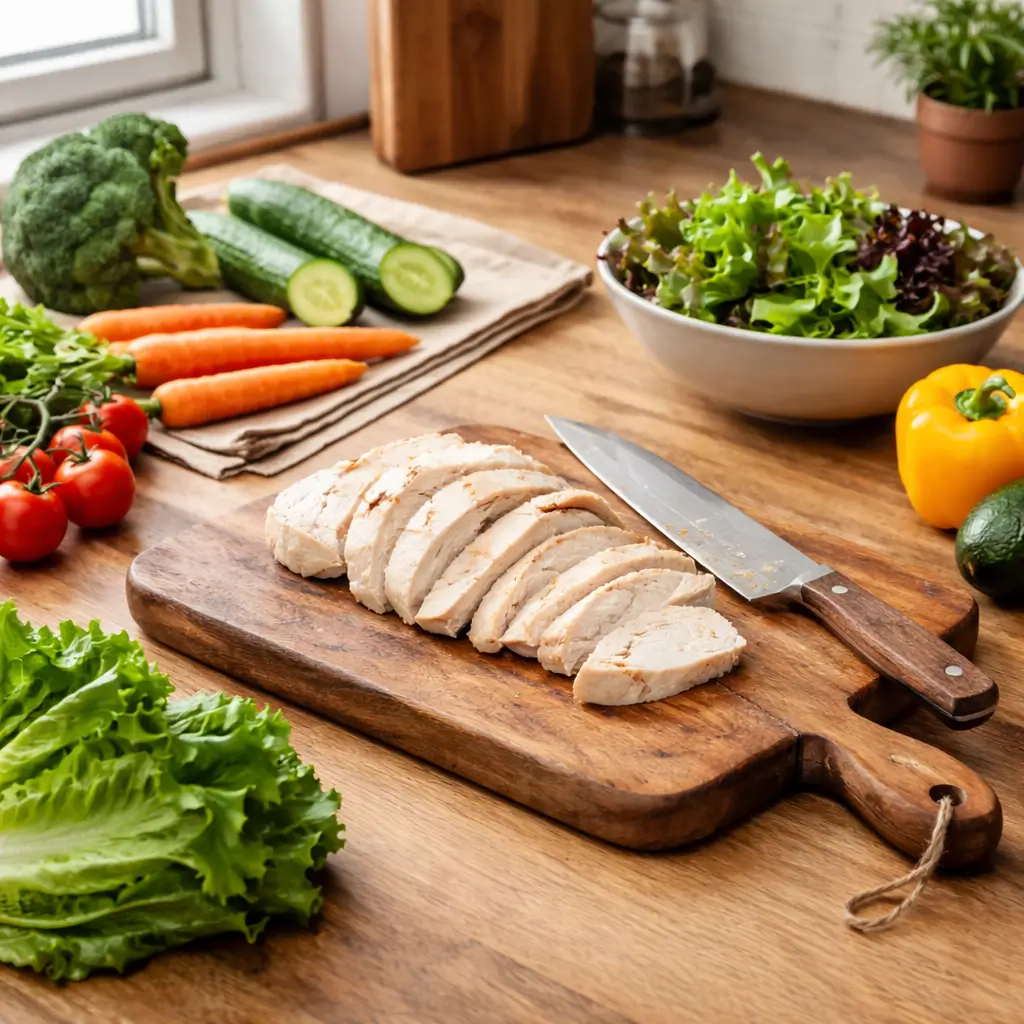
What Foods Can Cats Eat? (Quick Answer)
Cats can safely eat cooked lean meats (chicken, turkey, beef, and lamb), certain cooked fish (salmon, cod, sardines), select vegetables (steamed carrots, peas, pumpkin, green beans), and limited fruits (blueberries, cantaloupe, watermelon without seeds). All proteins should be unseasoned, boneless, and thoroughly cooked. These foods are safe as occasional treats but do not constitute a complete diet.
Understanding Your Cat’s Nutritional Needs
Before diving into specific foods, it’s essential to understand why cats have such particular dietary requirements. Cats are obligate carnivores, meaning their bodies are designed to derive nutrition primarily from animal tissue. Unlike dogs or humans, cats cannot synthesize certain essential nutrients and must obtain them directly from their food.
Critical Nutrients Cats Need
Taurine stands as perhaps the most important amino acid for feline health. Cats cannot produce taurine internally and must consume it through animal proteins. A taurine deficiency can lead to dilated cardiomyopathy (heart disease), retinal degeneration, and reproductive problems. This is why a diet of only vegetables or grains—however “healthy” they might be for humans—would be catastrophic for a cat.
Arachidonic acid, an essential fatty acid found only in animal fats, plays crucial roles in skin health, kidney function, and reproduction. Vitamin A in its preformed state (retinol) is another requirement, as cats lack the enzyme to convert beta-carotene from plants into usable vitamin A.
Understanding these requirements illuminates a critical point: “safe to eat” does not mean “nutritionally complete.” A cat cannot survive on chicken breast alone, no matter how much she enjoys it. Commercial cat foods are formulated according to guidelines established by AAFCO (Association of American Feed Control Officials) to ensure complete and balanced nutrition—something nearly impossible to achieve with casual human food sharing.
The Safe List: Human Foods Your Cat Can Enjoy
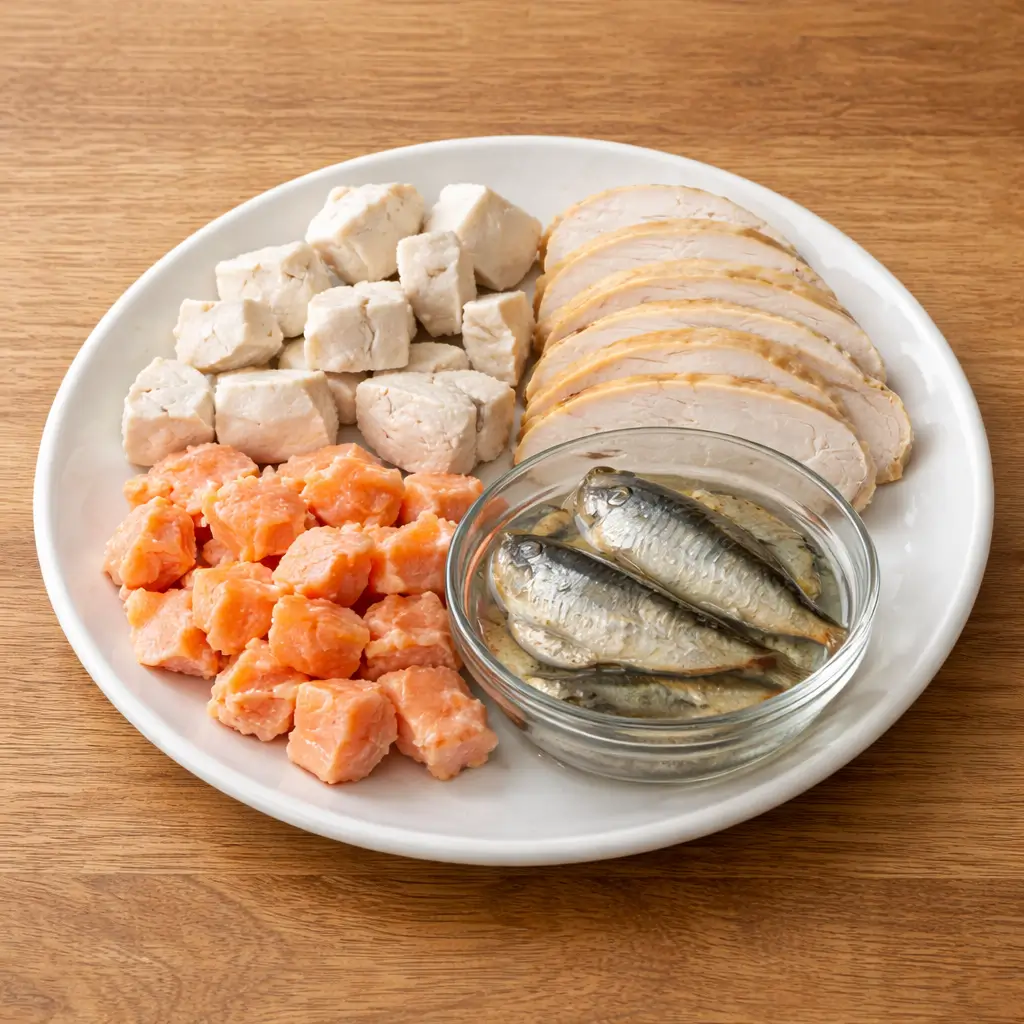
Safe Proteins for Cats
Protein forms the foundation of a healthy cat diet, and several human-grade proteins can be safely shared with your feline friend.
Cooked Chicken remains the gold standard of healthy cat snacks. Boneless, skinless chicken breast or thigh meat, cooked without any seasoning, provides excellent lean protein. Always ensure the meat is thoroughly cooked to an internal temperature of 165°F (74°C) to eliminate harmful bacteria. Remove all bones, as cooked bones can splinter and cause internal injuries or intestinal blockages.
Turkey offers similar benefits to chicken. Plain, cooked turkey meat makes an excellent treat, particularly during holiday seasons when owners are tempted to share. Avoid giving your cat any turkey that has been brined, seasoned, or cooked with onions or garlic.
Lean Beef provides iron and essential amino acids when cooked plainly. Ground beef should be thoroughly cooked and drained of excess fat. Avoid fatty cuts, as excessive fat can trigger gastrointestinal upset or, in susceptible cats, pancreatitis.
Lamb serves as another safe protein option, though it tends to be fattier than chicken or turkey. Use lean cuts and cook thoroughly without seasoning.
Cooked Fish can be an excellent occasional treat, though it should not form the mainstay of a cat’s diet. Salmon, cod, and sardines provide omega-3 fatty acids beneficial for skin, coat, and cognitive health. Always cook fish thoroughly and remove all bones. Avoid raw fish, which contains thiaminase—an enzyme that destroys thiamine (vitamin B1) and can lead to serious neurological problems.
| Safe Proteins | Preparation Method | Serving Size | Frequency |
|---|---|---|---|
| Chicken | Boiled or baked, no seasoning | 1-2 tablespoons | 2-3 times weekly |
| Turkey | Roasted or boiled, plain | 1-2 tablespoons | 2-3 times weekly |
| Lean Beef | Cooked through, drained | 1 tablespoon | 1-2 times weekly |
| Salmon | Baked or steamed, boneless | 1 tablespoon | Once weekly |
| Sardines | Packed in water, no salt | Half a sardine | Once weekly |
Vegetables for Cats
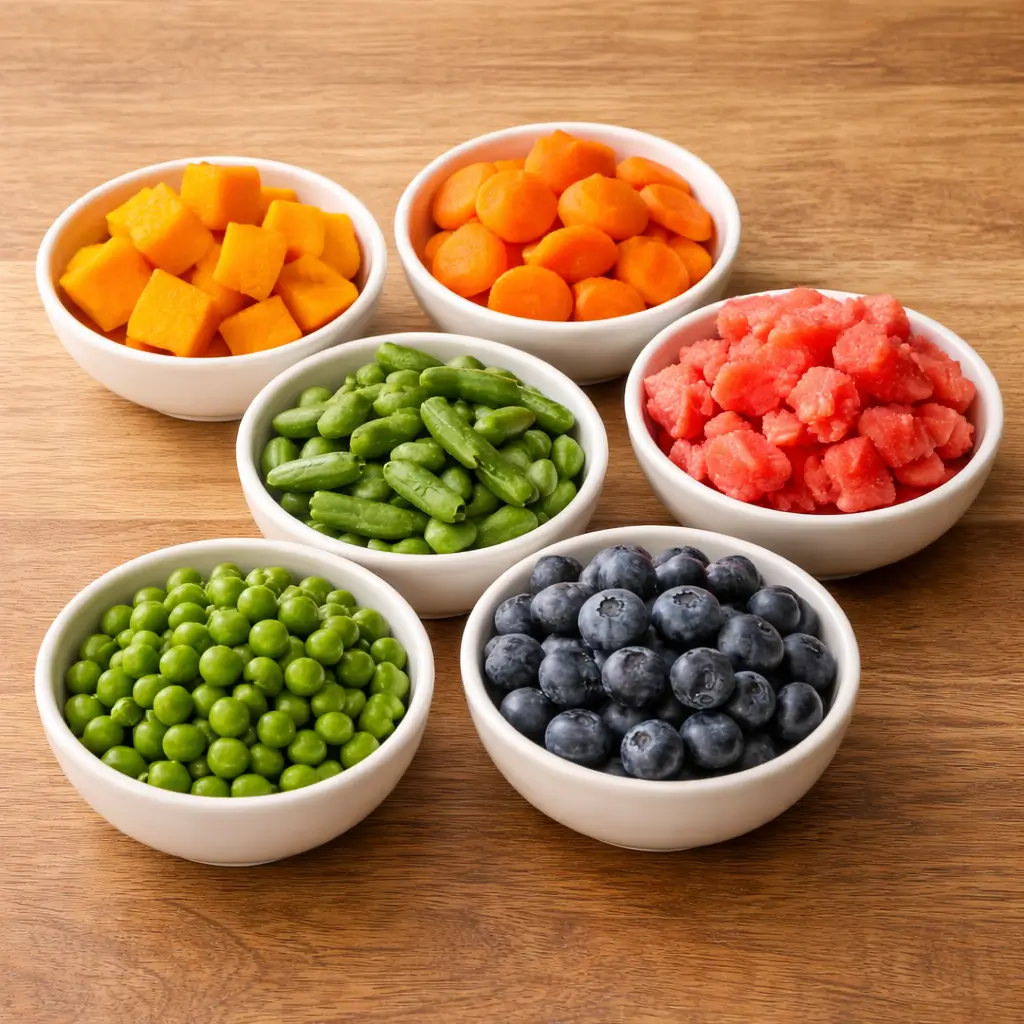
While cats derive minimal nutritional benefit from vegetables due to their carnivorous nature, certain veggies can serve as safe, low-calorie treats or digestive aids.
Pumpkin deserves special mention for its digestive benefits. Plain, cooked pumpkin (not pie filling, which contains sugar and spices) provides fiber that can help with both constipation and mild diarrhea. A teaspoon mixed into regular food can work wonders for digestive irregularities.
Steamed Carrots offer beta-carotene and fiber, though remember that cats cannot convert beta-carotene to vitamin A as humans can. Still, carrots are safe and some cats enjoy their mild sweetness.
Cooked Green Beans provide fiber and can be useful for cats on weight-management diets, as they add bulk without significant calories.
Steamed Peas are safe in small amounts and provide fiber and some plant-based protein.
Cooked Zucchini and Squash offer hydration and fiber, making them safe occasional additions.
All vegetables should be steamed or boiled until soft, then cooled before serving. Never add butter, salt, or seasonings.
Fruits Cats Can Eat
Cats lack sweet taste receptors, so most show little interest in fruit. However, several fruits are safe if your cat develops a taste for them.
Blueberries contain antioxidants and are perfectly safe in small quantities. Their small size makes them easy for cats to eat, though some prefer them slightly mashed.
Cantaloupe attracts many cats, possibly due to amino acids that mimic the scent of meat proteins. Remove all seeds and rind, offering only the flesh in small cubes.
Watermelon (seedless or with seeds removed) provides hydration and is safe as an occasional summer treat. Remove the rind completely.
Bananas are safe in very small amounts, though their high sugar content means they should be a rare treat—a thin slice at most.
Apples can be offered in small, peeled pieces with all seeds removed. Apple seeds contain cyanogenic compounds that are toxic to cats.
The “Maybe” List: Foods Safe in Moderation
Some human foods fall into a gray area—safe for most cats in limited quantities but with important caveats.
Dairy Products and Lactose Concerns
Despite the cultural image of cats happily lapping milk, most adult cats are lactose intolerant. Kittens produce lactase to digest their mother’s milk, but this enzyme production decreases after weaning. Feeding milk to a lactose-intolerant cat will likely result in digestive upset, including diarrhea, gas, and abdominal discomfort.
Hard Cheeses like cheddar contain less lactose than milk and may be tolerated in very small amounts by some cats. A pea-sized piece occasionally is unlikely to cause problems.
Plain Yogurt with live cultures contains less lactose due to bacterial fermentation. Small amounts may be tolerated and can even provide beneficial probiotics.
Lactose-Free Milk designed for cats is available commercially and eliminates the lactose concern entirely.
Eggs: Cooked Only
Cooked eggs provide excellent protein and are safe for cats. Scrambled eggs (without butter, milk, or seasoning) or hard-boiled eggs can make nutritious treats.
Raw eggs pose two problems: the risk of Salmonella contamination and the presence of avidin, a protein in raw egg whites that interferes with biotin absorption. Always cook eggs thoroughly before offering them to your cat.
Grains: Not Toxic, But Not Necessary
Cats have limited ability to digest carbohydrates and derive no essential nutrients from grains. However, small amounts of cooked grains are not harmful.
Cooked Rice is easily digestible and sometimes recommended for cats with upset stomachs. Plain white rice in small amounts is safe.
Oatmeal (plain, cooked) provides some fiber and B vitamins. A teaspoon occasionally is safe.
Bread in tiny amounts won’t harm your cat, but it offers no nutritional value and contributes empty calories. Avoid bread containing garlic, onions, or raisins.
The Toxic List: Foods That Can Kill Your Cat
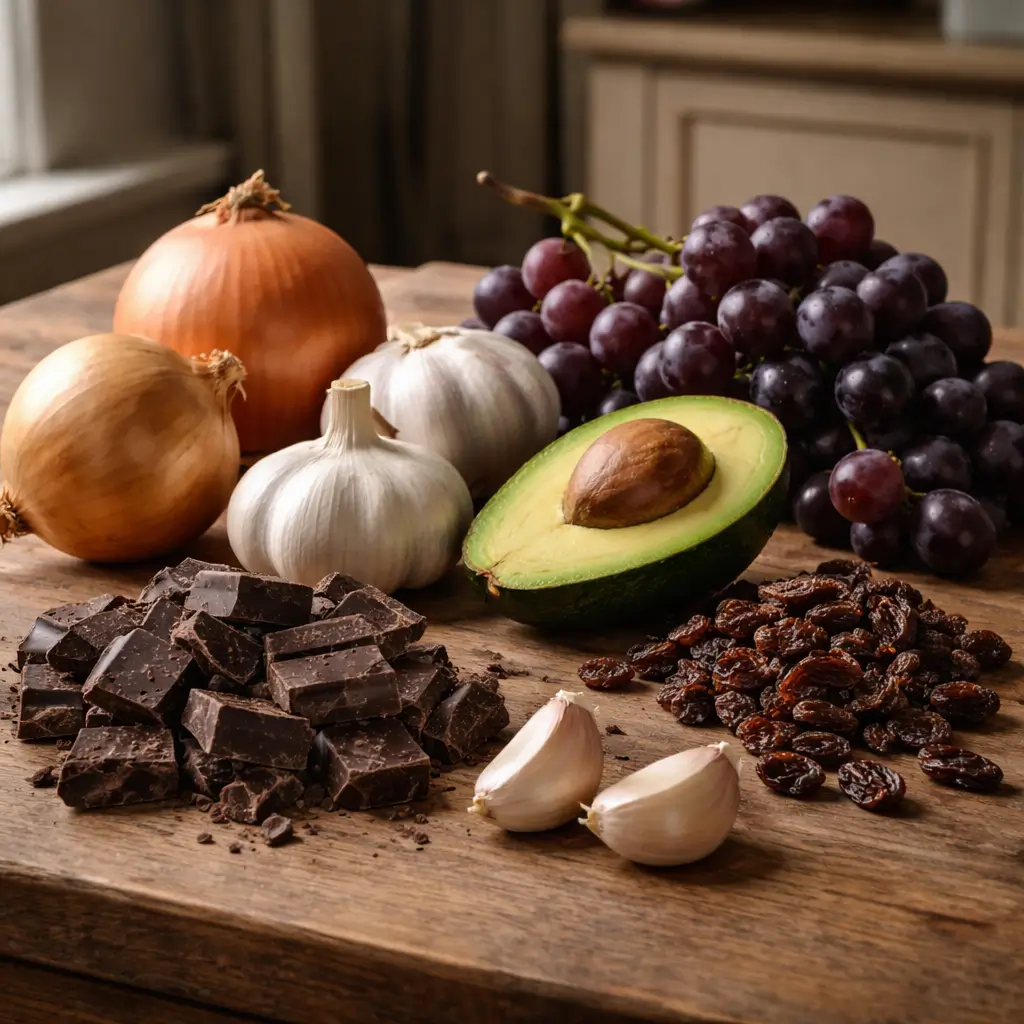
⚠️ CRITICAL WARNING: The following foods are dangerous or potentially lethal to cats. If your cat ingests any of these substances, contact your veterinarian or the ASPCA Animal Poison Control Center (888-426-4435) immediately.
Onions, Garlic, and Related Plants
All members of the Allium family—onions, garlic, shallots, leeks, chives, and scallions—are toxic to cats in all forms. Raw, cooked, powdered, or dehydrated, these foods contain compounds that damage red blood cells, leading to Heinz body anemia.
Symptoms may not appear immediately but can include weakness, lethargy, pale gums, reduced appetite, and reddish-brown urine. Even small amounts consumed regularly can cause cumulative damage. This toxicity is why you must never share seasoned human foods with your cat—most recipes include onion or garlic.
Chocolate and Caffeine
Chocolate contains theobromine and caffeine, both of which are toxic to cats. Dark chocolate and baking chocolate contain the highest concentrations, but all chocolate poses a risk. Symptoms include vomiting, diarrhea, rapid breathing, increased heart rate, seizures, and potentially death.
Coffee, tea, energy drinks, and other caffeinated beverages cause similar symptoms and should never be given to cats.
Grapes and Raisins
Grapes and raisins cause acute kidney failure in cats, though the exact toxic compound remains unidentified. Even small amounts can be dangerous. Symptoms include vomiting, diarrhea, lethargy, decreased urination, and eventually kidney failure. There is no safe amount—avoid these completely.
Xylitol (Birch Sugar)
Xylitol, an artificial sweetener found in sugar-free gum, candies, baked goods, and some peanut butters, causes a rapid release of insulin in cats, leading to dangerous hypoglycemia (low blood sugar). It may also cause liver failure. Symptoms include vomiting, loss of coordination, seizures, and collapse.
Alcohol
Alcohol in any form—beer, wine, liquor, or foods containing alcohol—is toxic to cats. Their small body size means even small amounts can cause ethanol poisoning, leading to vomiting, diarrhea, difficulty breathing, coma, and death.
Additional Toxic Foods
Macadamia nuts cause weakness, vomiting, tremors, and hyperthermia. Raw dough containing yeast expands in the stomach and produces alcohol during fermentation. Avocado contains persin, which can cause vomiting and diarrhea. Citrus fruits (oranges, lemons, limes) contain compounds toxic to cats and should be avoided.
| Toxic Foods | Toxic Compound | Symptoms | Severity |
|---|---|---|---|
| Onions/Garlic | N-propyl disulfide | Anemia, weakness, collapse | Severe |
| Chocolate | Theobromine, caffeine | Vomiting, seizures, cardiac issues | Severe |
| Grapes/Raisins | Unknown | Kidney failure | Life-threatening |
| Xylitol | Xylitol | Hypoglycemia, liver failure | Life-threatening |
| Alcohol | Ethanol | CNS depression, respiratory failure | Life-threatening |
Important Medical Warnings
Pre-Existing Health Conditions
Certain health conditions require special dietary considerations that may make otherwise “safe” foods problematic.
Chronic Kidney Disease (CKD) affects many senior cats. High-protein diets can accelerate kidney disease progression in cats already diagnosed with CKD. If your cat has kidney issues, consult your veterinarian before offering any protein-rich treats.
Pancreatitis requires a low-fat diet. High-fat foods like fatty meats, cheese, or fish with high oil content can trigger painful flare-ups. Cats with a history of pancreatitis should receive only veterinarian-approved treats.
Diabetes requires careful carbohydrate management. Avoid giving diabetic cats any treats containing sugar, grains, or starchy vegetables without veterinary guidance.
Food Allergies in Cats
Cats can develop allergies to any protein source, but chicken and fish are among the most common allergens. Symptoms include itching, skin problems, vomiting, and diarrhea. If your cat shows adverse reactions after eating certain proteins, consult your veterinarian about elimination diets.
How to Safely Prepare Human Foods for Cats
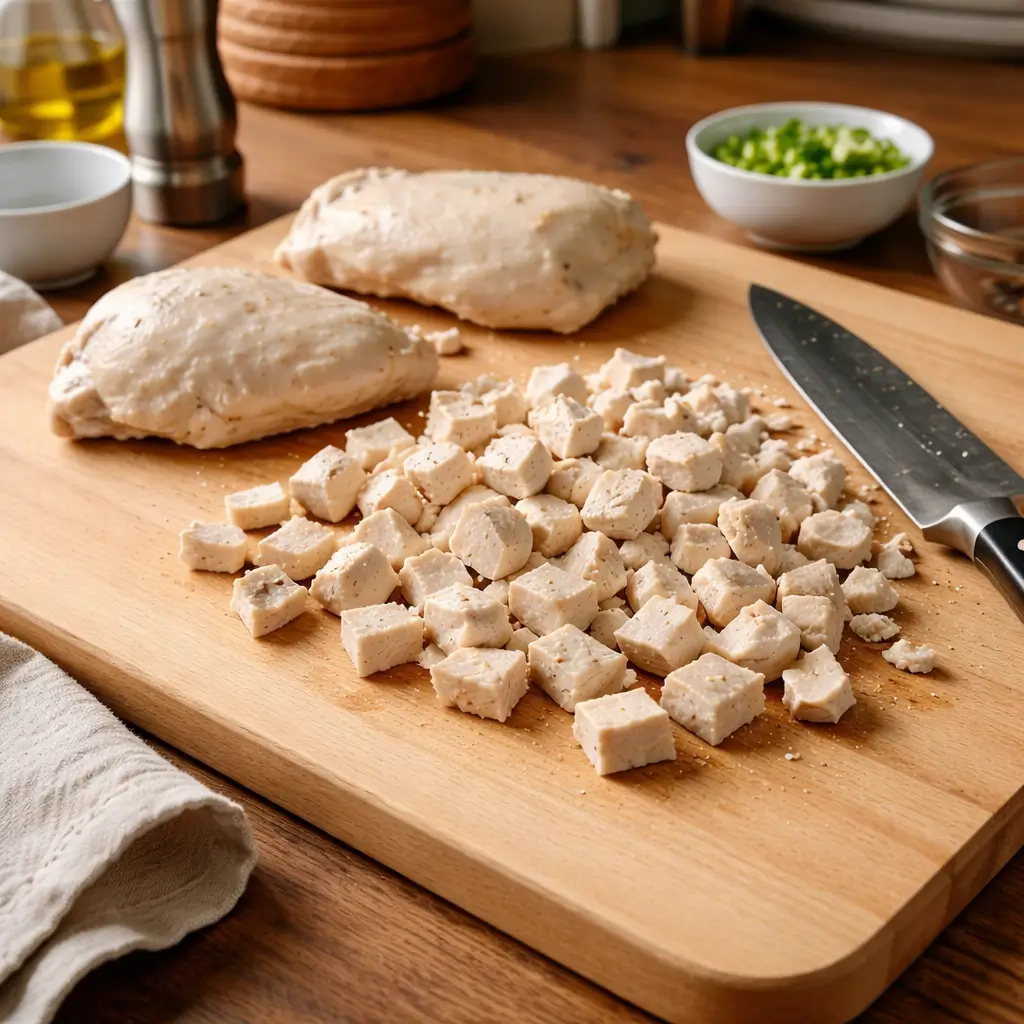
Essential Preparation Rules
Following these guidelines ensures that the human foods you share with your cat remain safe.
Never use seasonings, spices, or salt. This includes garlic powder, onion powder, pepper, and any spice blends. Plain is the only way to prepare food for cats.
Always cook meat and fish thoroughly. Raw meat carries risks of bacterial contamination (Salmonella, E. coli) and parasites. Cook all proteins to safe internal temperatures.
Remove all bones. Cooked bones are brittle and can splinter, causing choking, intestinal punctures, or blockages.
Use safe cooking methods. Boiling, steaming, baking, and poaching are ideal. Avoid frying or using butter and oils.
Cut food into appropriate sizes. Small, bite-sized pieces prevent choking and make eating easier.
Cool foods to room temperature before serving to prevent mouth burns.
A Balanced Homemade Meal: Veterinarian-Approved Recipe
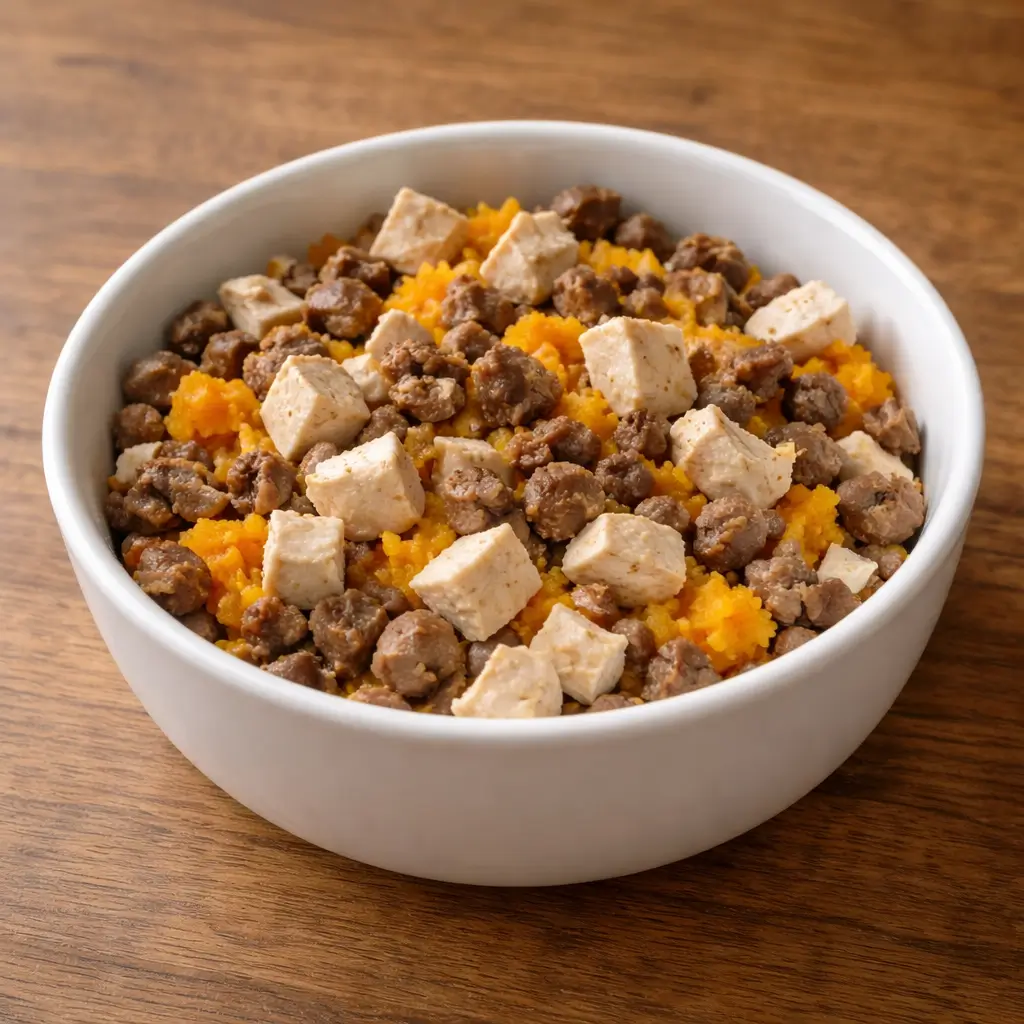
This recipe demonstrates what a properly balanced homemade cat meal requires. Note the essential supplements—this is why homemade diets require veterinary supervision.
Chicken and Liver Complete Meal
Ingredients (makes approximately 2 days of food for an average adult cat):
- 100g boneless, skinless chicken thigh
- 25g chicken liver
- 30g cooked pumpkin (plain, no spices)
- 1/4 teaspoon bone meal powder (calcium source) OR 400mg calcium carbonate
- 200mg taurine supplement
- 1 capsule vitamin B-complex for cats (follow product directions)
- 1/2 teaspoon salmon oil (omega-3 source)
Instructions:
Begin by bringing a pot of water to boil. Add the chicken thigh and liver, reducing heat to simmer for fifteen to twenty minutes until completely cooked through. Remove the meat and allow it to cool completely.
Chop the cooked chicken and liver into small, bite-sized pieces or pulse briefly in a food processor to your cat’s preferred texture. Combine the meat with the cooked pumpkin in a bowl, mixing thoroughly.
Add the bone meal powder, taurine supplement, and contents of the B-complex capsule. Drizzle with salmon oil and mix until all supplements are evenly distributed.
Divide into portions and refrigerate for up to three days, or freeze portions for up to three months.
Important: This recipe should not replace a complete commercial diet without full veterinary consultation. A board-certified veterinary nutritionist can help formulate balanced homemade diets tailored to your cat’s specific needs.
Simple Healthy Treats
Unlike complete meals, occasional treats don’t require heavy supplementation. These recipes use safe ingredients for intermittent feeding.
Tuna and Pumpkin Bites
Combine one tablespoon of canned tuna (packed in water, drained) with one tablespoon of plain pumpkin puree. Mix until well combined and form into small, pea-sized balls. Serve immediately or refrigerate for up to two days. This makes approximately eight small treats—offer no more than two or three per day.
Dehydrated Chicken Strips
Slice one boneless, skinless chicken breast into thin strips, approximately one-quarter inch thick. Place strips on a baking sheet lined with parchment paper. Bake at 200°F (93°C) for two hours, or until completely dried and slightly crispy. Allow to cool completely before serving. Store in an airtight container for up to one week. Break into small pieces as treats—one or two strips daily maximum.
Portion Control and Feeding Guidelines
Understanding what foods can cats eat is only part of responsible treat-giving. How much you offer matters equally.
Treats and human foods should comprise no more than ten percent of your cat’s daily caloric intake. For an average ten-pound adult cat requiring approximately 200-250 calories daily, this means treats should not exceed 20-25 calories.
Consider that one tablespoon of cooked chicken contains approximately 25 calories—already at the daily treat limit. Overfeeding treats leads to weight gain, nutritional imbalances, and picky eating behaviors.
Always introduce new foods gradually. Offer a tiny amount first and wait 24-48 hours to monitor for adverse reactions before offering more.
Conclusion: Sharing Food Safely With Your Feline Friend
Understanding what foods can cats eat empowers you to share special moments with your feline companion safely. The key takeaways are straightforward: lean, cooked, unseasoned meats top the safe list; certain vegetables and fruits make acceptable occasional treats; dairy requires caution due to lactose intolerance; and toxic foods for cats—including onions, garlic, chocolate, grapes, and xylitol—must be avoided absolutely.
Remember that human foods, no matter how safe, serve as treats rather than nutritional foundations. A high-quality commercial cat food formulated to meet AAFCO standards remains the best way to ensure your cat receives complete and balanced nutrition.
When in doubt about any food, err on the side of caution and consult your veterinarian. Your cat’s health depends on informed choices—and now you have the knowledge to make them. That pleading meow might still be hard to resist, but at least you’ll know exactly which morsels are safe to share.